A. D. Patel Quotes
Education is not a luxury in colonial areas, but it is as much a necessity as in free countries. It is an amenity to which every citizen has a right. It is a social service which should be the first charge on the finances of a country…
Ambalal Dahyabhai Patel,1905-1969 Founder and leader of the Fiji National Federation Party, Statement calling for more spending on education, 1954
Sourced by: Eigen's Political and Historical Quotations


The organization was initially called the National Negro Committee. The following year the name was changed to the National Association for the Advancement of Colored People. Note that at the time, even for Blacks, the concept of desegregation was so far from reality that their efforts were simply to have segregated schools with the same resources as the white children had. The “separate but equal” doctrine was the method of the segregationists.

The Constitution, incredibly enough, never even mentioned education. But at one of the earliest opportunities available to Congress, it made this statement, the first on education by the United States government.


Alabama. Mississippi and the other states of the South have from the inception of the nation had a much poorer educational system (often no system at all). Even when Jim Crow discrimination was rampant in the South, the white schools were very poor and the Black schools terrible. At the end of the 20th century after integration, there were more serious attempts to improve education in the South and progress is being made to reach parity with the rest of the country. However, there is still in many Southern school boards hostility to science and other aspects of modern education and Southern states tend to censor school texts and library books this weakening the educational system. But progress is being made.

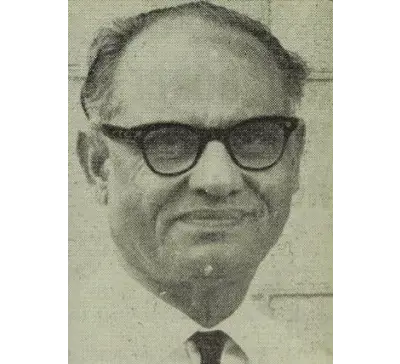
Ambalal Dahyabhai Patel, better known as A.D. Patel, was an Indo-Fijian politician, farmers' leader and founder and leader of the National Federation Party. Patel was uncompromisingly committed to a vision of an independent Fiji, with full racial integration. He was one of the first to advocate a republic, an ideal not realized in his lifetime. He also advocated a common voters' roll and opposed the communal franchise that characterized Fijian politics.
