Linus Pauling Quotes
Each nuclear bomb test spreads an added burden of radioactive elements over every part of the world. Each added amount of radiation causes damage to the health of human beings all over the world and causes damage to the pool of human germ plasma such as to lead to an increase in the number of seriously defective children that will be born in future generations.
Within a few months 11,021 scientists, of forty-nine countries also signed the appeal.
Linus Pauling, 1901-1994, Nobel Laureate in Chemistry, Scientists' Bomb Test Appeal, May 15, 1957
Sourced by: Eigen's Political and Historical Quotations


This was a political use of sarcasm and irony. Oak Ridge was the site of the largest facility for producing fissionable material in the world as the result of the Manhattan Project. And yet the problem of what to do with the radioactive waste has never been resolved. So Oak Ridge was producing more and more radioactive uranium in the area without a resolution in sight. The “joke” was that the people in the area were immune, so production could continue without a solution to radioactive waste.

During the meltdown of the Japanerse nuclear reactors at Fukashima, American sailors were deployed to provide critical assistance fram an American aircraft carrier in the area. They played a significant role in getting the reactors under control. Many of the Japanese at the emergency area had suffered serious illness from the radiation exposure abd a number died. The crew of the aircraft carrier had developed a highly unusual prevelance of serious illness assocated with radiation exposure. The U. S. Defense Department was "styding the matter" but had not decided that the unusual illness patern was related to their assignment assisting in th emergency. A number of the sailors had come to japan and asked for damages from the Raactor company which like most American Corporations would not do or say anything. The Japanese government also was silent on the issue when the sailors came to Japan, However, this former prime minister felt so strongly that he visited the Sailors and took up their cause in letting the Japanese public know what had happened and how the government and the electic company were acting. This was Koizumi's tearful response to the press covering the saolors and their request.


What makes this quote important historically is to realize the assurances that he had to give the press and the public. This shows the level of anxiety about nuclear science that existed at the time and some of the absurd claims that critics and skeptics made. While it was true that there were same dangers in the nuclear testing, some of which the authorities were ignorant of, they were not of the expansive catastrophic magnitude that the critics claimed. Almost all new science and technology develops a Luddite community of opponents who want the technology stopped or at least slowed much. These opponents almost always exaggerate dangers in order to alarm public opinion via fear. At the same time, almost all the new scientific arenas eventually display and disclose problems and potential dangers of which the scientists and policy makers originally unaware. But they are almost always different from those the original critics claim. For example instead of environmental concern for radiation caused mutations in the animal life or the problem of what to do with radioactive byproducts of making atomic weapons, the warnings were that the water would flow out of the oceans and that gravity would be nullified.


Rocky Flats was operated for the government by Dow Chemical Company, which unfortunately violated the terms of their contract and improperly buried nuclear waste which ended up producing so much radiation that the plant had to be closed down and the government had to buy up property around the nuclear plant as a buffer zones so that private people would not receive high radiation doses by being too close to the plant.


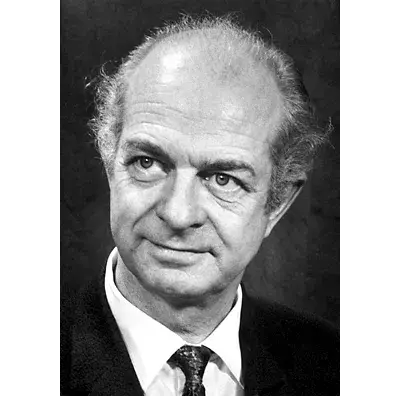
Linus Carl Pauling was an American chemist, biochemist, chemical engineer, peace activist, author, and educator. He published more than 1,200 papers and books, of which about 850 dealt with scientific topics. New Scientist called him one of the 20 greatest scientists of all time, and as of 2000, he was rated the 16th most important scientist in history. For his scientific work, Pauling was awarded the Nobel Prize in Chemistry in 1954. For his peace activism, he was awarded the Nobel Peace Prize in 1962. He is one of four individuals to have won more than one Nobel Prize (the others being Marie Curie, John Bardeen and Frederick Sanger). Of these, he is the only person to have been awarded two unshared Nobel Prizes, and one of two people to be awarded Nobel Prizes in different fields, the other being Marie Curie. He was married to the American human rights activist Ava Helen Pauling.
