George Herbert Quotes
Drink not the third glass, which thou canst not tame,
When once it is within thee; but before
Mayst rule it, as thou list: and pour the shame,
Which it would pour on thee, upon the floor.
It is most just to throw that on the ground,
Which would throw me there, if I keep the round.
Herbert, George. "The Church-Porch." The Temple: Sacred Poems and Private Ejaculations, Printed by Thom. Buck, and Roger Daniel, 1633.


The English had sent a cask of rum as a “token of friendship” It was returned

Aeneas Sylvius Piccolomini. Early in his career, as Secretary to the Emperor, he was assigned to oversee the education of the young king of Bohemia. Piccolomini’s advice of temperance was not at all based on theological reasons as drinking was rampant, even among the clergy. Also, he recognized the major effect of peer pressure on teenagers as it affects drinking behavior.


This pledge was taken by over half a million Americans in Mathew's 1849-1851 tour of the United States promoting the Teetotal Abstinence Society.

The distinction between recreational drinking and heavy drinking is a subtle one and rarely made until modern times. Most leaders who would not have heavy drinkers in positions of responsibility were usually themselves teetotalers and they were very rare. Heavy drinkers and alcoholics have been in positions of responsibility throughout history including modern times—eg House Ways & Means Chairman Wilbur Mills and Russian President Boris Yeltsin. Peter was unusual in that he made the distinction.


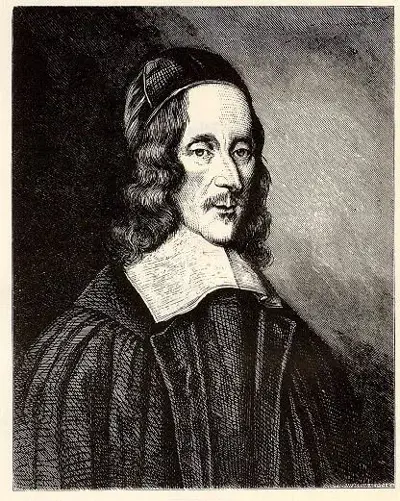
George Herbert was a Welsh-born poet, orator, and priest of the Church of England. His poetry is associated with the writings of the metaphysical poets, and he is recognised as "one of the foremost British devotional lyricists." He was born into an artistic and wealthy family and largely raised in England. He received a good education that led to his admission to Trinity College, Cambridge, in 1609. He went there with the intention of becoming a priest, but he became the University's Public Orator and attracted the attention of King James I. He served in the Parliament of England in 1624 and briefly in 1625.
