James Brown Quotes
Don't terrorize. Organize. Don't burn. Give kids a chance to learn ... The real answer to race problems in this country is education. Not burning and killing. Be ready. Be qualified. Own something. Be somebody. That's Black Power.
James Brown, Singer & Entertainer, Public TV Statement During the Riots in Washington DC, 1968.
Sourced by: Eigen's Political and Historical Quotations


Arkansas Governor Faubus ordered the national guard to prevent Black students from integrating Central High School in Little Rock. President Eisenhower was a man of action and not rhetoric and his lack of firm public statements overlooked an opportunity to use the Presidential “bully pulpit” and exercise his moral leadership and authority. Armstrong was irate at Eisenhower for appearing to do nothing and say nothing. See {615852}. When Eisenhower did enforce the court order and used Federal troops, Armstrong sent him this congratulatory telegram. His reference to walking into the schools was in support of many who suggested that the best thing the President could have done was to personally take one of the Black students by the hand and walk into the school with him or her. With the mood of the Southern racists, such an act was potentially very risky for the President and it is not known whether of not the President and his staff ever considered such an act.

At the time the Democratic Politicians of the South went to extremes from refusing to register Black voters to countenancing assault, torture and even murder of Blacks who organized voter registration. When the racists switched to the Republican party, is was Republican politicians who tried to make voter registration and voting more difficult for minorities, but the means and degree of these efforts were very mild compared to what is was when Rustin uttered this quotation.

This view was extremely popular with the White establishment but decried by Du Bois and a few other Black leaders. Unfortunately for African Americans and the rest of the country. Washington in this quotation turned out to be very wrong. Blacks quickly produced all kinds of goods and services that whites wanted, but the Jim Crow culture of the South and much of the North would simply not allow any relations between the races that might diminish the friction. Southerners for over 100 years blamed and resented the Negro for the destruction of the South in the Civil War and trying to act as if he was equal to the whites. And Blacks blamed whites for the century of slavery and then not enforcing the laws and denying them civil rights and equality.


Dr. Ambrose was the senior Black education official in the country. Note his title which was given to him by President Franklin Delano Roosevelt.

He was the only Black member of Congress at the time.

Lincoln had instituted the first draft in American History and it was terribly resented by many Americans. The draft laws allowed the wealthy and upper middle class to avoid service by paying a $300 fee of hiring a substitute just like in the Vietnam War the upper classes could get College Draft deferments. The mob led mostly by poor Irish, began by protesting the draft; then they attacked the mansions and houses of the wealthy; and then they went after Blacks. The Irish poor feared large numbers of Negroes coming out of slavery and competing for their jobs and lowering the prevailing wages. Blacks were beaten and lynched and 5,000 almost half of the then Negro population were driven to Brooklyn, New Jersey and the New York suburbs. It was the worst riot in United States History.


Ironically Fort-Whiteman was arrested in Moscow in one of Stalin’s massive purges and sent to a Soviet Gulag where he died of starvation. He was one of several Americans who were Stalinist victims. Ironically, he was right about Blacks and revolutionary change, but whereas he thought the “revolution” would be a socialist and communist one, the “Civil Rights Revolution” was a legal, cultural and intellectual one. However, statements like this were taken advantage of by white racists who saw in every attempt to right the wrong of racial discrimination, a communist revolution in the making.

This phrase was also to be used over 100 years later by Malcolm X. See {624101} and {38291}.

In the early 20th century, Carver and Du Bois were the two most important Negro leaders in America. However, they disagreed over tactics. Carver tended to believe that if the Negro would be educated and trained for meaningful occupations, he would rise in the eyes of the whites and discrimination would diminish. Du Bois was more cynical as can be seen in this quotation as he looked back on history when he was 95 and close to death. He had the advantage at this time of seeing that Washington’s strategy had failed, but he opposed Washington on this from the beginning. Most whites preferred Washington’s view as whites were relived of immediate moral responsibility for racism and the burden was placed on Blacks to train, develop and display themselves as worthy. It was only when very large numbers of Blacks had done this and nothing much changed in terms of civil and economic rights, that it was clear that Washington’ view had been hopelessly naïve.

Lowery was one of the senior Black leaders in the civil rights movement of the late 1950s and early 1960s. In this interview, he was describing the atmosphere in Mobile, Alabama. Clergy of most faiths were active in the Civil Rights Movement in the South with the exception of the Roman Catholic Church which was very institutionally conservative. The Catholic leaders had a problem in that Catholics had been heavily discriminated against in early America and this prejudice was heaviest in the South in the 20th century. They feared that Catholic Activism against the status quo would create more problems for Catholics so they were not very helpful or supportive. This was NOT true for Catholics in general. Many individual Roman Catholics marched in the demonstrations, and some Catholic clergy from outside of the South came to the Southern protests and demonstrations. In the 20th century, the Catholic Church was divided between social activist reformers and in some cases revolutionists and the conservative wing of the Church who had supported the status quo.
There was a large contingent of whites who showed up—many invited and expected and many who came on their own.

This was an indirect slap at the Boy Scouts of America. At the time, racial segregation was legal and overtly practiced in the Southern States. The Boy Scouts could have been a great force for desegregation, but the leadership did not have that as a value for the organization. The Girl Scout leadership however saw the contradiction between segregation and the supposed values of America and their own organization. They were not only very active but very successful at desegregation at a time when they were atypical, and for most Americans, segregation was the norm.

His home was right in the midst of the major riot area. The government had just instituted the draft to provide soldiers for the Civil War. The rich could avoid the draft by paying a modest fee. The Irish of New York were at just slightly above the Negro in the New York Socioeconomic scale and the two groups competed for the low skilled jobs. Many Irish felt that they were being forced to fight to free the Southern Negroes who when free would come to New York and compete for their jobs. They rioted and killed over 100 Blacks.

Taft, very progressive on racial matters, was a little too optimistic. The “intelligent” Southerners were in the small minority. Only a week after Taft made this statement, Joseph Gorden, a Negro, was lynched outside Greenwood, Mississippi.
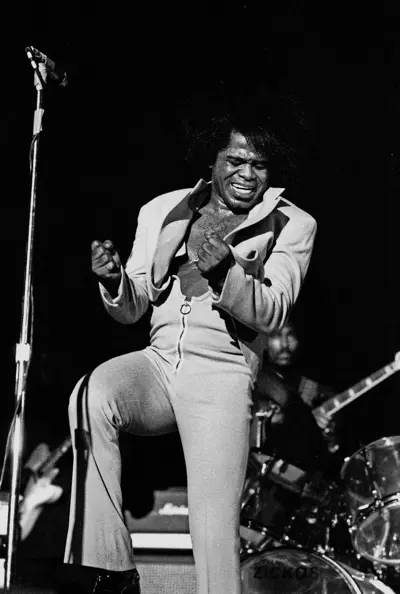
James Joseph Brown was an American singer, songwriter, dancer, musician, record producer and bandleader. The central progenitor of funk music and a major figure of 20th-century music, he is often referred to by the honorific nicknames "Godfather of Soul", "Mr. Dynamite", and "Soul Brother No. 1". In a career that lasted over 50 years, he influenced the development of several music genres. Brown was one of the first ten inductees into the Rock and Roll Hall of Fame at its inaugural induction in New York on January 23, 1986.
