Timur Quotes
Don spare helmets; take up weapons, and guard the camp.
Despite the Muslim perception of the role of women, Tamerlane’s nomadic tradition had women warriors and he used them to guard the camp and freed up the men.
Tamerlane, 1336-1405, Turkmen Mongol Conqueror, Order to the camp-followers during the invasion of the Golden Horde
Sourced by: Eigen's Political and Historical Quotations

Plan Orange was the code name of the united states plan for possible war with Japan. In this ironic quotation, American military planners realized five years before Pearl Harbor that surprise attack was the major vulnerability. We were surprised and had no help from our intelligence service which despite the recommendations was almost nonexistent.


The Southern forces in the West had been rendered ineffective. New Mexico was no longer a potential battle ground and Carson felt that he was no longer really needed. However, his resignation was not accepted, and Carson was persuaded to stay on.


The officers were all white, and Higginson was the Commander. It was his first experience with Negro troops, and he had heard much extrapolation from racist attitudes about Blacks not being able to make good soldiers. Ironically, the same suspicions of Blacks as military men carried over into the Second World War when this canard was disproved so publicly that it finally was erased with the exception of the most inveterate racists for whom no evidence would matter.


1st Baron Verulam. The word “estate’ meant a political unit or subunit. These might be ruled by kings, dukes, war lords, etc. However, Bacon’s point was all armaments and the physical trappings of war are relatively minor when compared to the qualities of the population. With modern technology, this principle has become less and less true. Given the same technology in war, the outcome will depend on the human qualities and warlike disposition of the humans. However, a modern force with modern equipment and weapons can defeat an enemy of braver and more warlike disposition which does not have the same technology. In the modern world, a number of cultures find this a very distressing reality. The noble and courageous man should win, but Western technology, many complain, is undermining the old, traditional virtues.
1st Baron Verulam. While most agree with the importance of this principle, it is easy to say and very hard to do. Appointing or electing leaders for wartime situations has always been difficult as it involves predicting how people will behave in the future. In WWII for example, many American and German Generals were fired. Adolf Hitler was the classic example of a very popular politician and demagogue who did not have a steady hand but whose maniacal lurches actually weakened the German military effort despite the morale contribution his popularity made.


As the military governor of Louisiana during the Civil War he issued this order in response to the insults and abuse that Federal officers were routinely receiving from the women of New Orleans. For this he was branded a criminal by Jefferson Davis and received a derogatory nickname. See {633651}.


See {637854} for a quote on the soundness of our military planning.

Ivan Khrfistoforovich Bagramyan. Most militaries including ours have generally been trained and equipped for the last war and not the next war.

Washington’s strategy was brilliant in that he wanted to avoid open, fixed position, European style battle. Instead, he fought a defensive war where he moved his troops and had them dig in by constructing defensive works that would be easier to defend against experienced European troops. It was only when the French forces combined with his that Washington went on the attack in the open.


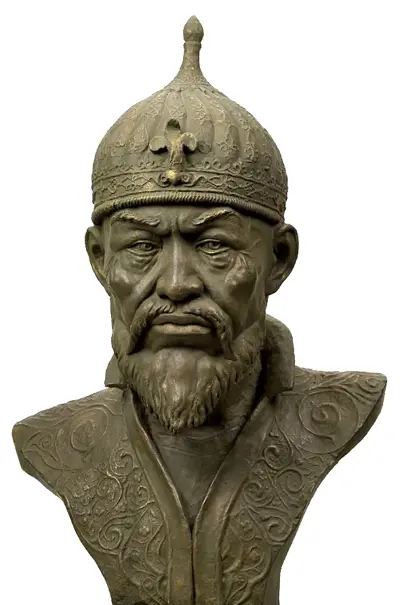
Timur, was a Turco-Mongol conqueror who founded the Timurid Empire in and around modern-day Afghanistan, Iran and Central Asia, becoming the first ruler of the Timurid dynasty. As an undefeated commander, he is widely regarded as one of the greatest military leaders and tacticians in history. Timur is also considered a great patron of art and architecture as he interacted with intellectuals such as Ibn Khaldun and Hafiz-i Abru and his reign introduced the Timurid Renaissance.:341–2
