John Law Quotes
Domestick Trade depends on the Money. A greater Quantity employes more People than a lesser Quantity. A limited Sum can only set a number of People to Work proportion'd to it, and 'tis with little success Laws are made, for Employing the Poor or Idle in Countries where Money is scarce; good Laws many bring the Money to the full Circulation 'tis capable of, and force it to those Employments that are most profitable to the Country: But no Laws can make it go furder, nor can more People be set to Work, without more Money to circulate so, as to pay the Wages of a greater number. They may be brought to Work on Credit, and that is not practicable, unless the Credit have a Circulation, so as to supply the Workman with necessaries; If that's suppos'd, then that Credit is Money, and will have the same effects, on Home, and Forreign Trade.
John Law, 1671-1729, Scottish Economist, Money and Trade Considered: With a Proposal for Supplying the Nation with Money, 1705
Sourced by: Eigen's Political and Historical Quotations

This is one of the earliest enumerations of the methods by which nations might rectify an imbalance of trade.
The assumption was that money would always be backed by gold or silver. In effect, raising or allaying the money was to change the amount of gold or silver that a particular denomination of money would be able to be exchanged for. This is one of the interesting proofs that these processes did nothing economically—for if they could, no one would want the money. This has always been a weakness or a strength—depending on one’s political point of view—of a gold standard.


The colony, Darien, failed as the Spanish evicted the colonists. Yet Holland’s economic view of the advantages of international trade was remarkably prescient.


North was none-the-less in favor of allowing interest rates be much higher, but was stating the best argument, believed at the time by most English experts, and many American economists today.

The most successful way of poor nations developing rapidly is to trade with rich nations.


Whitaker was right bet at that time his advice was not heeded. When Ireland late in the 20th century finally acted on his advice and eliminated almost all of their protectionism, the economy thrived and not only did the Irish emigration stop, but people began to immigrate to Ireland for the economic opportunity.


Foreign trade creates jobs and eliminates jobs. The people who lost jobs as the result of increased foreign trade are readily identified while the job beneficiaries may never know the reason. So it is a hard political sell even though most of the economic studies have showed that more jobs of more value are created by trade than lost. However, the losers are generally blue collar workers while the beneficiaries are generally white collar and knowledge workers. So there is a socioeconomic class differentiation in the trade issue.


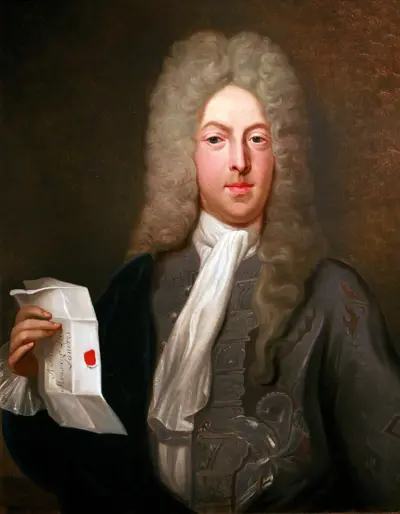
John Law was a Scottish economist who distinguished money, a means of exchange, from national wealth dependent on trade. He served as Controller General of Finances under the Duke of Orleans, who was regent for the juvenile Louis XV of France. In 1716, Law set up a private Banque Générale in France. A year later it was nationalised at his request and renamed as Banque Royale. The private bank had been funded mainly by John Law and Louis XV; three-quarters of its capital consisted of government bills and government-accepted notes, effectively making it the nation's first central bank. Backed only partially by silver, it was a fractional reserve bank. Law also set up and directed the Mississippi Company, funded by the Banque Royale. Its chaotic collapse has been compared to the 17th-century tulip mania in Holland. The Mississippi bubble coincided with the South Sea bubble in England, which allegedly took ideas from it. Law as a gambler would win card games by mentally calculating odds. He originated ideas such as the scarcity theory of value and the real bills doctrine. He held that money creation stimulated an economy, paper money was preferable to metal, and dividend-paying shares a superior form of money. The term "millionaire" was coined for beneficiaries of Law's scheme.
