Miguel Hidalgo y Costilla Quotes
Do you not realize that this war is waged against the Spanish alone, and that it would therefore be a war without enemies and would be all over in a day if you did not help them to fight? Do not let yourselves be deceived, Americans, or allow them... to make you believe that we are God’s enemies and want to overthrow His holy religion... Open you eyes; remember that the Europeans are trying to set Creole against Creole while they themselves look on from a safe distance. If things turn out favorably they will take the credit for having conquered us, and will mock and despise whatever is Creole...
Many are surprised that the first Mexican revolutionary leaders were Catholic Priests, because the Catholic Church was always on the side of Spain and against Mexican revolutionary efforts. The church and the state were totally intertwined at the time, so the Church officials supported the government officials and vica verca. However, there were priests who saw the injustice and corruption of the colonial Spanish government, and not only sided with the revolutionists but became revolutionary leaders. These were opposed and usually excommunicated by the Church establishment authorities.
Miguel Hidalgo y Costilla, 1753-1811, Mexican Priest and the First Mexican Revolutionary Leader, Proclamation, 1811, Quoted in Robert Harvey, Liberators
Sourced by: Eigen's Political and Historical Quotations


Genocide generally means the intentional destruction and elimination of a people. In the case of Columbus and the Spanish Conquistadors, they thought little of the lives of the indigenous people of the New World, but they wanted them for slaves to extract the gold and silver. They wiped out several peoples, mostly as a result of the communicable diseases (mainly smallpox) they brought from Europe for which the South Americans had little or no immunity. Also the size of the invasion forces (the Spanish) was relatively small. The size in land and number of people who they invaded was huge. The Spanish were the worst of the European empires from the point of view of the native colonized people. And Columbus was the trigger. So Chavez has a point in castigating Columbus and the Spanish but, typically, and like many politicians, his oratory lacked the precision of total accuracy.


The Spaniardes have executed most outragious and more then Turkishe cruelties in all the west Indies
He was one of the strongest English advocates of colonization of the New World. At that time this was as strong an epithet of cruelty as could be made by Europeans. It was an accurate assessment.


Al-Omar is one of Saudi’s leading clerics and the Saudi Arabian government—supposedly is a major ally of the United States—not only tolerates this type of inflammatory rhetoric but it makes no effort to repudiate this and other radical Islamic statements. There is no freedom of Speech in Saudi Arabia, and people are arrested all the time for saying things that are displeasing to the Royal Family. But no attempt to suppress this kind of virulent anti-American attack.

Spinoza’s ideas were considered so radical and dangerous that he was the only man in history who was excommunicated by the Catholics, the Jews and the Muslims.

This edict in effect divided up the New World between Spain and the other Catholic countries. The Pope wanted to avoid conflict among the Catholic powers of Europe. Shortly afterward, the Pope brokered a specific deal, The Treaty of Tordesillas, dividing exploration rights between Spain and Portugal. The Pope divided up the New World, land he had never visited, people he had never met, among Catholic European powers.


He reversed the Spanish policy of keeping guns from the American Indians. He provided arms with the express intention that they destroy each other. This policy almost worked for the Indians of California but several Indian tribes were exterminated.


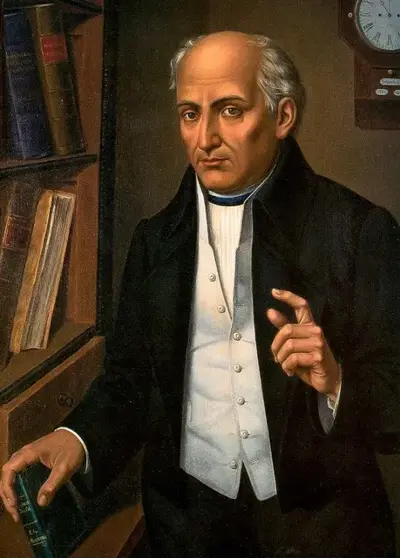
Don Miguel Gregorio Antonio Francisco Ignacio Hidalgo-Costilla y Gallaga Mandarte Villaseñor, more commonly known as Don Miguel Hidalgo y Costilla or Miguel Hidalgo (Spanish pronunciation: [miˈɣel iˈðalɣo]), was a Spanish Catholic priest, a leader of the Mexican War of Independence, and recognized as the Father of the Nation.
