Walt Whitman Quotes
What has miserable, inefficient Mexico...to do with the great mission of peopling the New World with a noble race?
Whitman, Walt. "Our Territory on the Pacific." The Brooklyn Daily Eagle, 7 July 1846, p. 2.

Mexico was in a chaotic state with the central government not able to control the countries, especially in the North. There were numerous American proposals like this one. See {596921}.


Charleston was in the Southern part of the state where most people supported slavery. Douglas made an unequivocal pitch for the racist vote {600060} and forced Lincoln to take a stand. Like many politicians today, Lincoln decided to give the audience what they wanted to hear. It is not clear whether or not he ever believed this statement or was just pandering in a political campaign. He had never said this in the Northern part of the state of before. Lincoln’s views on race changed and matured over the years, culminating in the Emancipation Proclamation. Lincoln lost the Senate seat to Douglas.


Describing the ethnic immigration quotas that Congress was debating in 1924:
There had been vicious assaults on most of the Black workers, when a few Negro welders were hired. The “compromise” was that the Negro workers would be protected from harm but there would be no Blacks in skilled positions. This was despite a huge labor shortage and a critical national need for the ships in the midst of war. Patriotism and the national crisis could not overcome the racism and hatred that existed in America. Northern newspapers pointed out the irony that America was practicing and upholding the racial theories of Hitler and the Nazis.


Bilbo was one of the worst racists who ever served in the Congress.
This book was the first popular attempt to spread the eugenics concept. Is was translated into German in 1925 and unfortunately read by Adolf Hitler who sent Grant a complimentary letter. See {603544} and {602054}


This quotation shows that the racism and master race of Nazi Germany was a norm in Germany well before Adolf Hitler and the Nazis. It was an endemic part of the culture. This makes the German post WWII reforms all the more remarkable as the vast majority of an entire nation had to radically change its world and personal views and perceptions.
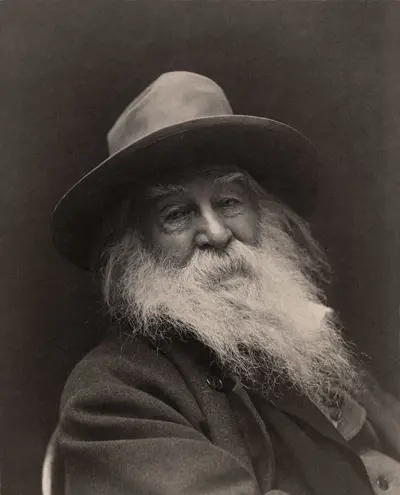
Walter Whitman was an American poet, essayist, and journalist. A humanist, he was a part of the transition between transcendentalism and realism, incorporating both views in his works. Whitman is among the most influential poets in the American canon, often called the father of free verse. His work was controversial in its time, particularly his poetry collection Leaves of Grass, which was described as obscene for its overt sensuality. Whitman's own life came under scrutiny for his presumed homosexuality.
