Dick Cheney Quotes
[Discussing specific weapons systems:] I voted for them when I was in Congress. Now that I'm secretary [of defense] I have to figure out a way to pay for them.
Richard B. Cheney, Vice President of the United States (Republican), U. S. Congressman (Republican, WY), White House Chief of Staff, U. S. Secretary of Defense, Interview, 1989
Sourced by: Eigen's Political and Historical Quotations


The Congress wants to keep control of exactly what the Pentagon buys so that each member can try to get more than his fair share of the Federal dollar. But the Congressional budget process is usually slow, and with the recent Congresses they can hardly get anything done. The President nor the Secretary of Defense cannot stop or slow down procurements that are not needed or can be deferred and spend the already appropriated funds on emergency needs for the troops fighting in the field.


To a great extent, the same is true in our modern world.
Although Israel is a vibrant democracy with an aggressive muckraking press, the continuous threats and actual attacks via missiles or terrorists, give national security and safety a high priority in political budgeting and policy making. There is a very powerful role of censorship that the military could and does exercise, with nothing like the American 1st Amendment to protect freedom of speech. However, the military generally has not utilized that power to enable governments of any political party to cover-up scandals or incompetency. However, no one knows if they have used censorship to cover up the incompetencies and scandals of the military itself.

See {615006} for but one example of terrible military money and procurement management.

Most Republicans at the time would argue for government spending reductions except for defense spending for which they wanted an increase in most cases despite huge waste and abuse in the Department of Defense. (See {615006} for just one example). Mulvaney, a new congressman with Tea Party backing, pointed out the hypocrisy of the this Republican position over the last decades, but this had been a central part of the Ronald Reagan platform.
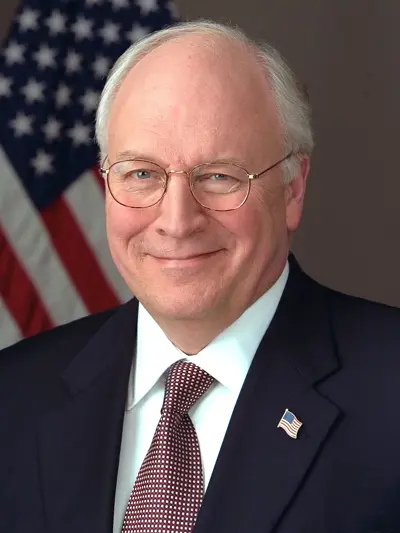
Richard Bruce Cheney is an American politician and businessman who served as the 46th vice president of the United States from 2001 to 2009 under George W. Bush. He has been cited as the most powerful vice president in American history. He is also one of the most unpopular American politicians, holding an approval rating of just 13% upon leaving office. Cheney has been the oldest living former U.S. vice president since 2021, following the death of Walter Mondale.
