Harper's Weekly Quotes
[Describing Abraham Lincoln:] Filthy story-teller, despot, liar, thief, braggart, buffoon, usurper, monster, ignoramus Abe, old scoundrel, perjurer, robber, swindler, tyrant, field-butcher, land-pirate.
Harper's Weekly, 1860
Sourced by: Eigen's Political and Historical Quotations


Describing Martin Luther King Jr.:

Nine years later he was responsible for Napoleon’s election as Consul.

Fremont and some of the Radical Republicans wanted Lincoln immediately to declare the slaves of the rebelling states free. As a major general in charge of an area, he wrote a military order emancipating all the slaves in his jurisdiction. President Lincoln countermanded the order as soon as he found out. He wanted Fremont to only free the slaves whose owners were actively working against the union. Lincoln needed to hold the border states like Maryland in the Union and was working on a plan whereby slave owners who were loyal to the Union would be economically compensated when their slaves were freed. If loyal slaveholders in Fremont’s area would lose their slaves with no compensation, Lincoln feared that the otherwise loyal border states would be driven to the confederacy thus shifting the balance of power. Lincoln had his own plan for emancipation and would not allow Fremont to alter that. As a result of this speech, the Radical Republicans nominated Fremont to run against Lincoln. For a few weeks he looked like he would run, but then he and Lincoln made a deal. Lincoln fired Montgomery Blair, Fremont’s arch enemy, from the cabinet, and Fremont withdrew from the election.


Bartolo was the most famous legal expert of his day and for many years thereafter as he died at the age of 44—the height of his career. In Italy, Spain and other nations of Europe there were statutes passed that said if there was no precedent in Roman Law, the writings of Bartolo should dictate the law.


Fermi and Segre was two of the group of European Scientists who emigrated to the United States and were key to the Manhattan Project developing the Atomic Bomb.


The dictator that he thought Russia needed, Stalin, turned on him in 1937 for not agreeing with Stalin enthusiastically enough, had a 1 day trial for treason, and executed the best military man in the country despite the fact that Russia would need its military to fight the German invasion.


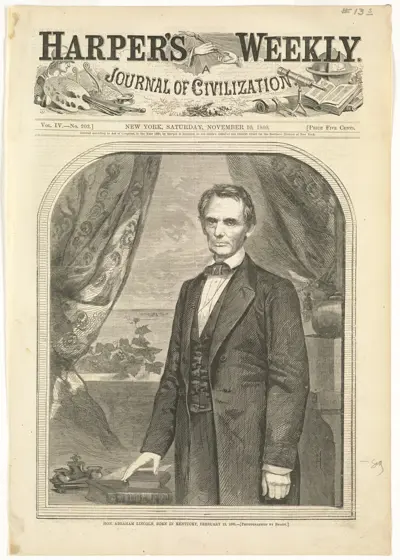
Harper's Weekly, A Journal of Civilization was an American political magazine based in New York City. Published by Harper & Brothers from 1857 until 1916, it featured foreign and domestic news, fiction, essays on many subjects, and humor, alongside illustrations. It carried extensive coverage of the American Civil War, including many illustrations of events from the war. During its most influential period, it was the forum of the political cartoonist Thomas Nast.
