Walter Savage Landor Quotes
Democracy is always the work of kings. Ashes, which in themselves are sterile, fertilize the land they are cast upon.
Landor, Walter Savage. "Washington and Franklin." Imaginary Conversations of Literary Men and Statesmen, Vol. 1, Taylor and Hessey, 1824.

The absurdity was that Adolf Hitler had more unilateral power and authority than and king did in the 20th century.


England had, under Henry VIII, left the Roman Catholic Church where the King replaced the Pope as head of the English Church. Henry’s successors then had to organize and manage the national Christian church. James was discussing the hierarchy of the Church of England and there was a suggestion that Bishops be eliminated and have every priest directly responsible to the crown. Bishops would be powerful figures who might form a power center. (They did later). However, King James I observed that the King is God’s choice and rules by divine right. So there had to be bishops to crown kings. The bishoprics were retained.


Cromwell was not opposed to monarchy per se as long as it was reasonably checked. He saw Charles II as a terrible monarch. After deposing Charles, he and his associates had to come up with some form of government. As “Lord Protector” he was a de facto monarch without the trappings.

In 1848 a number of revolutions flared throughout Europe with a call for democracy rather than monarchy. The Prussian king was one of those who really believed that he was selected by God to rule, was very frightened and tried to enlist the Queen and England to present a united front against the revolutionaries. England, which had already had a strong functioning parliament and extensive voting suffrage, protected most of the rights of its citizens and was a Constitutional Monarchy where there were limits to the power of the monarch. Further, Victoria was extremely popular and in many ways was far ahead of the electorate in terms of modern democratic reforms. So she was not in the panic of many of the other crowned heads of Europe were in. Somewhat following the example of England, King William IV allowed a parliament and minimized the strong military role that characterized Prussia. Most of the 1848 revolutions failed to sieze governments but, as with Prussia, forced reforms in what was a long movement to European democracy that would take another 150 years. Note also the logic about religion. Since the revolutionists did not believe in the divine right of kings, they opposed God’s will on earth. Therefore, they opposed God and must be atheists. Almost all counter revolutionary accusations included the claim—often not true—that the revolutionaries were atheists.


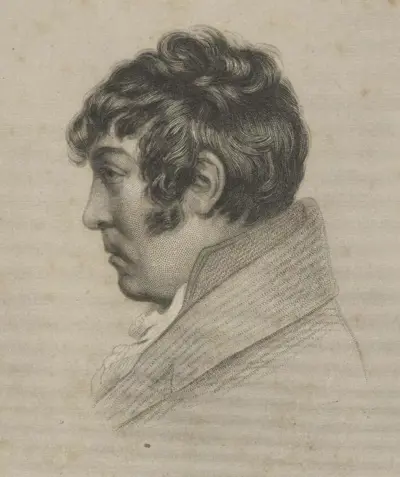
Walter Savage Landor was an English writer, poet, and activist. His best known works were the prose Imaginary Conversations, and the poem Rose Aylmer, but the critical acclaim he received from contemporary poets and reviewers was not matched by public popularity. As remarkable as his work was, it was equalled by his rumbustious character and lively temperament. Both his writing and political activism, such as his support for Lajos Kossuth and Giuseppe Garibaldi, were imbued with his passion for liberal and republican causes. He befriended and influenced the next generation of literary reformers such as Charles Dickens and Robert Browning.
