George Logan Quotes
... dastardly attacking the humble cottage instead of meeting in an open and honorable conflict the armed battalions of our enemy.
In 1808 the U. S. had embargoed trade with both England and France. The economic effects in America were severe as the blockade prohibited foreign trade. One sharp criticism was by a peace-loving Quaker leader who described the embargo:
George Logan, 1753-1821, Physician & Quaker private diplomat, 1808
Sourced by: Eigen's Political and Historical Quotations


Salisbury had always been opposed to colonial adventurism and was opposed to the jingo segment of English society associated with his Colonial Secretary Joseph Chamberlain. Nonetheless, Britain became more embroiled in Africa. Salisbury’s explanation was in French: “L’appetit vient en mangeant.”

In 1832 the President sent Edmund Roberts, a New Hampshire sea captain, to arrange commercial treaties with Asian countries such as Burma, Indo-China, Siam and Japan:

France and England were at war. Each country seized American ships that were trading with their enemy. Many Americans clamored for war which President Jefferson wished to avoid. He got Congress to pass the Embargo Act which prohibited trading with either of the warring countries. However, some American traders did not obey the law and traded anyway. Napoleon needed money badly so instead of paying the captains of the ships for the goods, he just seized the goods and sold the ships. The U. S. Ambassador to France confronted Napoleon who demonstrated an ability to twist logic and morality that is rare.

At the time there were UN sanctions against Iran for violating the Non Proliferation Treaty regarding transparency of its nuclear development.

This was one of the first proposals for a type of world government. Ironically, Angell, and English politician, was suggesting that the United States take the lead in his ‘new world order” and be the principle controlling factor. This was before the League of Nations and the United Nations.


1st Earl of Beaconsfield

2nd Earl of Guilford. This bill cut off all trade with the American Colonies. It was meant as pressure to cease the rebellion. It did not work.


This was one of the blackest marks on the Reagan Presidency. The Congress had voted sanctions against the racist, dictatorial government of South Africa as many other countries had done. However Reagan opposed the sanctions, although he claimed that he opposed apartheid and the general human rights denial of South Africa, he opposed doing anything about it that might change the situation. To many this was like saying one is opposed to marital rape but refusing to pass legislation to make it illegal. Congress, then passed the sanctions bill overriding the President’s veto.

We are so used to hearing the freedom seeking reasons for the American Revolution that we overlook the more selfish and venal motives. This quotation shows that the large merchants of the colonies had banded together in an illegal conspiracy trust and monopoly and managed to keep many British competitive products out of the colonies. The British, for equally venal reasons, began to enforce the laws in favor of free trade. Many large American merchants were getting huge profits (and American consumers paying more) from their protectionist illegal monopoly. A Revolution would de facto assure that monopoly for many years to come, so they became supporters—patriots—of the American Revolution. As the Revolution drew closer, the Americans made efforts to protect the protectionism and monopoly of some of the richest Americans. See {636861}.

There was, well before the American Revolution, a restriction on the importation of British goods into the American colonies. Partially this was to pressure Parliament to stop some of its most repressive lawmaking. But it also supported what had become a very lucrative protectionist monopoly of large American merchants. See {636861}.

De Gaulle tended to see world affairs in terms of extreme, simplistic, and dramatic alternatives when reality is much more complex the truth was turned out to be for England a much more favorable outcome without either of these extremes.

This is an example of the 3 leading democratic powers refusing to recognize the will of the people in other nations in determining their leadership choice. King Constantine I was a demagogue who maintained popularity with the Greeks by constant roiling and urging conflict with Muslim Turkey—the traditional enemy of the Christian Greeks. It was particularly hypocritical in many eyes since President Woodrow Wilson had established the principle of self-determination. However, Constantine I was a disaster for the Greek people. This is one of the earliest situations where American foreign policy support was in conflict between good sense and self-determination. The dilemma has faced America frequently since then and was especially acute in the 2012 “Arab Spring” Egyptian election of the Muslim brotherhood which turned out to be a disaster for Egypt but at an earlier time had won a national election.

At the time, the key British Ambassadors were diplomats and espionage agents at the same time. The Dutch Monarch William V, Prince of Orange, was in a very precarious position and might be deposed. Officially Harris and the British were supporting him and Harris was giving him money to firm up his regime, but their great fear was that the French would support and control the Patriot Revolutionary movement, then quite active. So, secretly, Harris was providing money to the patriots through a few leaders, to have a strong and influential relationship with the Republic if William were deposed. At the same time he was officially supporting William. The British wanted William to maintain his rule and were helping him to do so, but if he couldn’t, they wanted to keep the French out. It was this double dealing that prompted this quotation when Harris was asking the Prime Minister for more secret money for his covert operations.
The Dutch Monarch William V, Prince of Orange, was in a very precarious position and might be deposed. Officially Harris and the British were supporting him and Harris was giving him money to firm up his regime, but their great fear was that the French would support and control the Patriot Revolutionary movement, then quite active or even intervene militarily to aid the Patriots.
The British Troops in this situation were new recruits who had not been trained well and were under the command of poor officers who uncharacteristically did not control their troops.
After WWI, the Germans were reluctant to make the reparation payments that they had agreed to in the peace treaty. The French, to “motivate” the Germans, occupied the German Ruhr Valley—an area that contained very important German heavy industry and coal mines that could not function under the occupation. See {640091}.
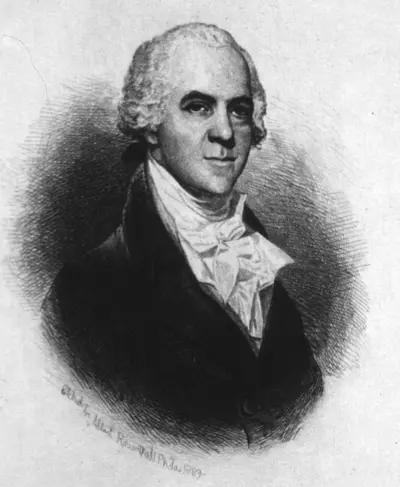
George Logan was an American physician, farmer, legislator and politician from Philadelphia County, Pennsylvania. He served in the Pennsylvania state legislature and represented Pennsylvania in the United States Senate.
