Bernie Sanders Quotes
Corporate greed, where they need more and more and more, regardless of how much they already have, is ruining the economy of this country.
Bernard Sanders, U. S. Congressman & Senator (Independent, VT), Candidate for the Democratic Presidential Nomination, Campaign Speech, Colombia, SC, August 21, 2015
Sourced by: Eigen's Political and Historical Quotations


Arguably, for most of American History, most of the “smartest” people contributed to manufacturing, construction, research and development—activities that produce things that are wanted and/or needed. However, Wall Street began attracting and paying for some of the smartest people in the society, who when they engaged in finance—not only contributed less to manufacturing, but began to create highly complex financial instruments and procedures that few people could understand and with which regulators have difficulty understanding. These and the other schemes of financing have been major factors in the economic problems that have beset the economy including the meltdown of 2008 and the subsequent Great Rescission.


He had just retired after 24 years in Congress.

Trump himself was known for being quite greedy and this admission was made before the Wall Street firms had been shown to be as greedy as they were during the aftermath of the 2008 economic meltdown recession when Wall Street Executives had their entire industry bailed out by the average taxpayer. Then they demanded their multi-million dollar bonuses while a large proportion of the people whose taxes bailed them out, were put out of work themselves by the greed, risk and profligacy of Wall Street.


some of the 1 percent Not all of the superrich in America are like this. Bill Gates and Warren Buffet, two of the richest Americans, for example, are supporters of these important programs for many citizens. However, the Koch Brothers, Senator Sanders best example, had $87 Billion and earned $12 Billion more that year. Yet they also made great efforts and spend large sums of money to take away the Social Security, Medicaid.


Born thought that her agency was responsible for regulating the new esoteric financial products—derivatives including credit default swaps—for otherwise there would be no regulation at all of financial products that could dwarf the stock and bond market. Summers persuaded her to back off. When the Meltdown of 2008 hit, the huge derivative exposure of the large banks and some insurance companies was so great that it was one of the major causes for the meltdown of the entire banking system. Summers, normally a great economist not only called this one wrong, but later, along with most other government and private economists ignored a very explicit warning—See {637168}, {637986}, and {620038}.


U. S. Treasury Secretary Larry Summers called Rajan a “Luddite” for this view, but what Rajan observed and predicted was exactly what happened in the Meltdown of 2008 which led to the Great Recession. Rajan was one of the few economists to call this right. Several, invested their own money assuming a crash and made billions. Most, like Summers and the Federal Reserve Chairmen in retrospect admitted that they missed the signs and didn’t connect the dots. See {637168}, {637987}, and {620038}


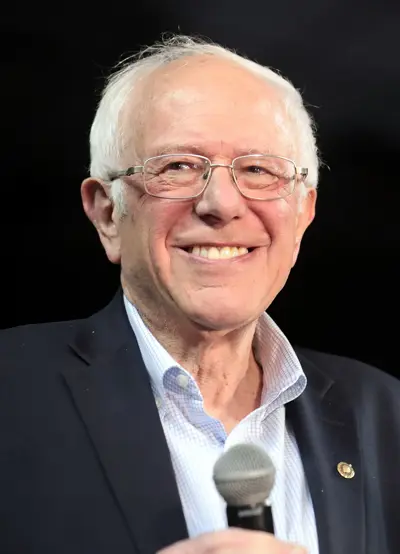
Bernard Sanders is an American politician who has served as the junior United States senator from Vermont since 2007 and as U.S. Representative for the state's at-large congressional district from 1991 to 2007. He is the longest-serving independent in U.S. congressional history, although he has a close relationship with the Democratic Party, having caucused with House and Senate Democrats for most of his congressional career. Sanders unsuccessfully sought the Democratic Party nomination for president of the United States in 2016 and 2020, finishing in second place in both campaigns. Before his election to Congress, he was mayor of Burlington, Vermont.
