Jacques Delors Quotes
Contrary to what people say, my wife never turned me away from the presidency. She told me to reflect on it and do what I wanted.
Delors, Jacques. Interview by John Lloyd. New Statesman, 8 May 1998.


Patton always believed that Eisenhower wanted to be President. At the beginning of the war Patton was much senior to Eisenhower, but President Roosevelt promoted Eisenhower above many more senior generals. Eisenhower thought Patton the best fighting general in the army, but a public relations and administrative problem. Several times when he had gone too far, Eisenhower reprimanded him but kept him in his command position. After the fighting was over, Patton became the military governor of part of Germany and was not as successful at peacekeeping and nation building as he was at fighting. Eisenhower was convinced that Patton would destroy himself and get fired by the army command and the President if he continued as governor. Patton confused Eisenhower’s prudent and politic demeanor with the allies as a lack of courage. And Patton could never get over the fact that Eisenhower and never commanded an army fighting in the field. He was jumped to Supreme Allied Commander, in a very bold and brilliant stroke by FDR who passed over many senior generals.


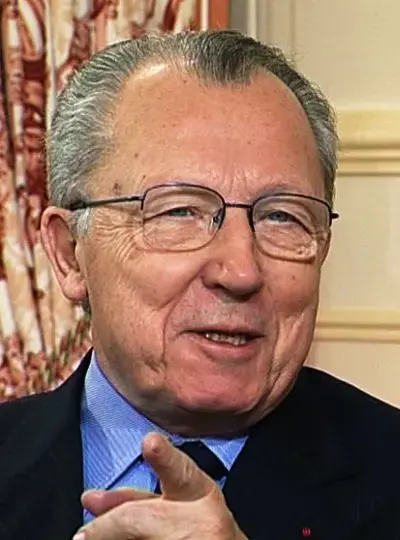
Jacques Lucien Jean Delors is a French politician who served as the 8th President of the European Commission from 1985 to 1995. He served as Minister of Finance of France from 1981 to 1984. He was a Member of the European Parliament from 1979 to 1981. As President Delors was the most visible and influential leader in European affairs. He implemented the policies that closely linked the member nations together and tirelessly promoted the need for unity. He had critics but on the whole was well respected for his imagination and commitment to the cause of European unity. His two main achievements were creating a single market that made possible the free movement of persons, capital, goods, and services within the Community. He also headed the committee that proposed the monetary union to create the Euro, a new currency to replace individual national currencies. This was done in the 1992 Maastricht Treaty.
