Rutherford B. Hayes Quotes
If you do get into the Senate, don't get the Presidential mania. It makes mad every man who is at all prominent at Washington either in the House or Senate. Scores of men, usually sound and sensible, fancy they can be President, who has no more right to think so than the autocrat of Russia. I have no knowledge of any tolerably conspicuous politician at Washington whose career is not colored and marred by his ambition to be President. I say this in all seriousness. It makes fools of all sorts from [Daniel] Webster and Lewis Campbell.
Rutherford B. Hayes, 1822-1893, 19th President of the United States (Republican, OH), Letter to Guy M. Bryan, July 11, 1858
Sourced by: Eigen's Political and Historical Quotations


Patton always believed that Eisenhower wanted to be President. At the beginning of the war Patton was much senior to Eisenhower, but President Roosevelt promoted Eisenhower above many more senior generals. Eisenhower thought Patton the best fighting general in the army, but a public relations and administrative problem. Several times when he had gone too far, Eisenhower reprimanded him but kept him in his command position. After the fighting was over, Patton became the military governor of part of Germany and was not as successful at peacekeeping and nation building as he was at fighting. Eisenhower was convinced that Patton would destroy himself and get fired by the army command and the President if he continued as governor. Patton confused Eisenhower’s prudent and politic demeanor with the allies as a lack of courage. And Patton could never get over the fact that Eisenhower and never commanded an army fighting in the field. He was jumped to Supreme Allied Commander, in a very bold and brilliant stroke by FDR who passed over many senior generals.

His main reason for believing this is that all appropriations bills must be initiated by the House of Representatives. Lobbyists therefore often give the House more attention than the Senate.

In 1899, Theodore Roosevelt was a very popular governor of New York and was courted by many party leaders as a vice presidential candidate in 1900. The vice presidency then, as now, had many drawbacks. Roosevelt took the advice and became president upon McKinley's death.


Carter did much of his greatest work after his service as President.


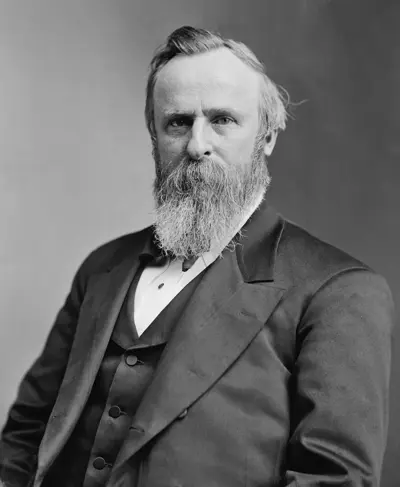
Rutherford Birchard Hayes was an American politician and attorney who served as the 19th president of the United States from 1877 to 1881, after serving in the U.S. House of Representatives and as governor of Ohio. A lawyer and staunch abolitionist, he had defended refugee slaves in court proceedings during the antebellum years. He negotiated the political agreement to end federal support of Reconstruction.
