Benjamin N. Cardozo Quotes
Congress may spend money in aid of the "general welfare.
Benjamin N. Cardozo, 1870-1938, Supreme Court Justice, Helvering v. Davis, 1936
Sourced by: Eigen's Political and Historical Quotations


Many politicians had been complaining that the CDC and NIH had not trained more community hospital staffs in infectious disease protection techniques when the Ebola problem came to America. However, the budgets for these kinds of activities had been cut back each of the recent previous years. Lee made the assumption that Congress wanted government to work. In actuality there was a strong core of legislators in that Congress, who wanted government to fail so that citizens would tire of spending money on failures and thereby shrink the size of government. The members of Congress who wanted government to be effective however at that time had other more dramatic uses of money that training and capacity building of local hospitals.


All the objections that Coolidge had in his veto message, were not convincing to modern Presidents and members of Congress as well as well the American people. Our Agricultural policy has had all these elements for years now.

At the time there were tax breaks for large yachts but not for small boats that a middle class person might own. It was another example of the tax laws at the time where the poor paid only Social Security taxes, and the rich lobbied for an got very large tax breaks and subsidies and hence the burden was carried by an increasingly stressed middle class .and by cuts in services to the needy. The companies that made the yachts also supported the tax breaks as did the unions and workers in the industry. . See {624984}. .

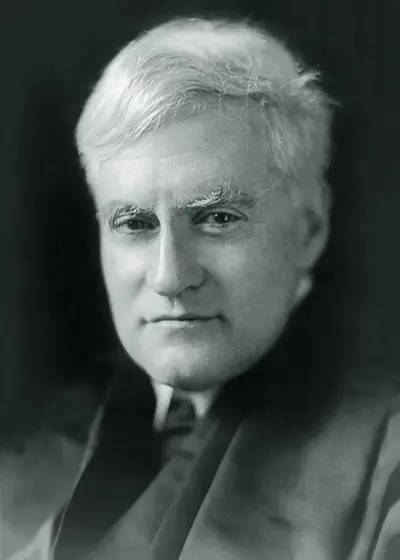
Benjamin Nathan Cardozo was an American jurist who served on the New York Court of Appeals and later as an Associate Justice of the Supreme Court. Cardozo is remembered for his significant influence on the development of American common law in the 20th century, in addition to his philosophy and vivid prose style. Cardozo served on the Supreme Court six years, from 1932 until his death in 1938. Many of his landmark decisions were delivered during his eighteen-year tenure on the New York Court of Appeals, the highest court of that state.
