Pierre Corneille Quotes
Clemency is the noblest trait which can reveal a true monarch to the world.
Corneille, Pierre. Cinna. 1641, Act II, Scene 1.


Manava Dharma Shastra. Interestingly in an otherwise cruel and authoritarian system, slander of the king was overlooked in several situations including men in litigation who may be distressed with the king’s verdict. This text is a part of the Hindu Holy Texts. Hindus believe that Manu was a prophet whose text is revealed or inspired.


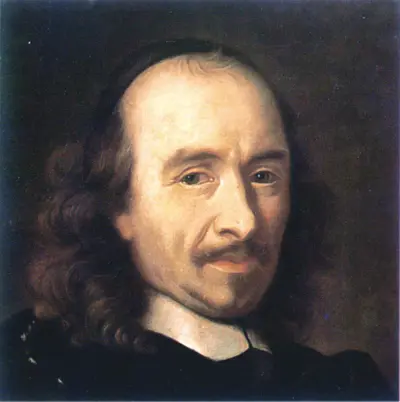
Corneille was born in Rouen, Normandy, France, to Marthe Le Pesant and Pierre Corneille, a distinguished lawyer. His younger brother, Thomas Corneille, also became a noted playwright. He was given a rigorous Jesuit education at the Collège de Bourbon (Lycée Pierre-Corneille since 1873) where acting on the stage was part of the training. At 18 he began to study law but his practical legal endeavours were largely unsuccessful. Corneille's father secured two magisterial posts for him with the Rouen department of Forests and Rivers. During his time with the department, he wrote his first play. It is unknown exactly when he wrote it, but the play, the comedy Mélite, surfaced when Corneille brought it to a group of traveling actors in 1629. The actors approved of the work and made it part of their repertoire. The play was a success in Paris and Corneille began writing plays on a regular basis. He moved to Paris in the same year and soon became one of the leading playwrights of the French stage. His early comedies, starting with Mélite, depart from the French farce tradition by reflecting the elevated language and manners of fashionable Parisian society. Corneille describes his variety of comedy as "une peinture de la conversation des honnêtes gens" ("a painting of the conversation of the gentry"). His first true tragedy is Médée, produced in 1635.
