Pierre Corneille Quotes
Clemency is the surest proof of a true monarch.
[Fr., La clemence est la plus belle marque
Qui fasse a l'univers connaitre un vrai monqrque.]
Corneille, Pierre. Cinna. Act 4, sc. 3.


Manava Dharma Shastra. Interestingly in an otherwise cruel and authoritarian system, slander of the king was overlooked in several situations including men in litigation who may be distressed with the king’s verdict. This text is a part of the Hindu Holy Texts. Hindus believe that Manu was a prophet whose text is revealed or inspired.


The Vice President’s Chief of Staff, Scooter Libby, had committed criminal acts in his zeal to threaten an experienced American Diplomat who had gone on an assignment for the CIA and reported information that cast doubt on the story that the Iraqis were about to deploy a nuclear weapon, thus giving ammunition to the few people in Washington who did not want to invade Iraq. To hurt the Ambassador, Libby leaked the fact to the press that his wife was a covert CIA agent. This not only ruined her career as she had been outed, a crime, but she was one of the CIA’s most effective agents whose contacts abroad were then put in terrible danger as having been working with a spy. No one at the time knew who the leaker was, but Bush was furious—see {630116}. He ordered all White House staff to find the leaker. The Vice President and Libby did not tell the President who the leaker was thinking that no one would ever find out. But when it was discovered it was public and Libby was indicted and faced trial. In the last days of Bush’s presidency Vice President Cheney put tremendous pressure on the President to Pardon Libby as did the extreme right wing of the Party. Cheney accused Bush of “leaving wounded on the battlefield’ arguing that Libby did everything for the President and his decision to invade Iraq. Bush had no formal policies and rules about pardons that he could turn to or ask a staffer to determine if the case warranted it. He finally yielded and commuted Libby’s prison sentence but left intact the $240,000 fine, the community service and the conviction of a felony which caused Libby to lose his license to practice law. Given Bush’s angry statements about the leak before the leaker was determined, he was accused of being a partisan hypocrite, uncaring about our agents safety and national security when his associates were guilty. The VP and the Republican extremists were also angry that Bush did not Pardon Libby completely and left the felony conviction on his record. This plagued Bush in the latter days of his presidency where his popularity had sunk very low. He wanted to help the new President avoid the same mistake. Ironically Clinton did not take his advice to have a firm pardon policy and in the closing days of the Clinton administration where he was very popular despite the partisan accusations and attempts to impeach him, ended up under great pressure for pardon’s and made some that have tarnished his reputation ever since.

Arguing for the Constitution's granting the unfettered Pardoning Power to the President.


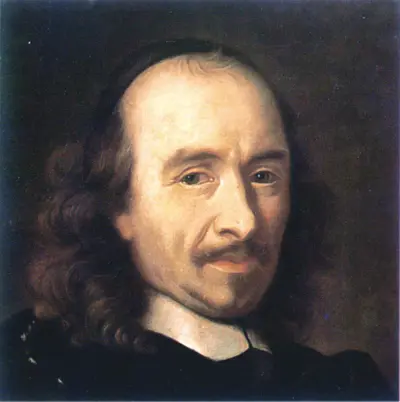
Corneille was born in Rouen, Normandy, France, to Marthe Le Pesant and Pierre Corneille, a distinguished lawyer. His younger brother, Thomas Corneille, also became a noted playwright. He was given a rigorous Jesuit education at the Collège de Bourbon (Lycée Pierre-Corneille since 1873) where acting on the stage was part of the training. At 18 he began to study law but his practical legal endeavours were largely unsuccessful. Corneille's father secured two magisterial posts for him with the Rouen department of Forests and Rivers. During his time with the department, he wrote his first play. It is unknown exactly when he wrote it, but the play, the comedy Mélite, surfaced when Corneille brought it to a group of traveling actors in 1629. The actors approved of the work and made it part of their repertoire. The play was a success in Paris and Corneille began writing plays on a regular basis. He moved to Paris in the same year and soon became one of the leading playwrights of the French stage. His early comedies, starting with Mélite, depart from the French farce tradition by reflecting the elevated language and manners of fashionable Parisian society. Corneille describes his variety of comedy as "une peinture de la conversation des honnêtes gens" ("a painting of the conversation of the gentry"). His first true tragedy is Médée, produced in 1635.
