Pliny the Elder Quotes
Cincinnatus was ploughing his four jugera of land upon the Vaticanian Hill, the same that are still known as the Quintian Meadows, when the messenger brought him the dictatorship, finding him, the tradition says, stripped to the work.
Pliny the Elder. The Natural History. Translated by John Bostock and H. T. Riley, vol. 4, H. G. Bohn, 1856, p. 7.


Peter van der Kun. The Roman society had developed huge inequalities in the wealth of its citizens. Land was the measure of wealth as the value was produced by the farming of it. In an agrarian reform, the holdings of any one citizen was limited to 500 acres. In effect the Romans created a maximum of wealth. To the owners of the large tracts of land, this was a redistribution of wealth.


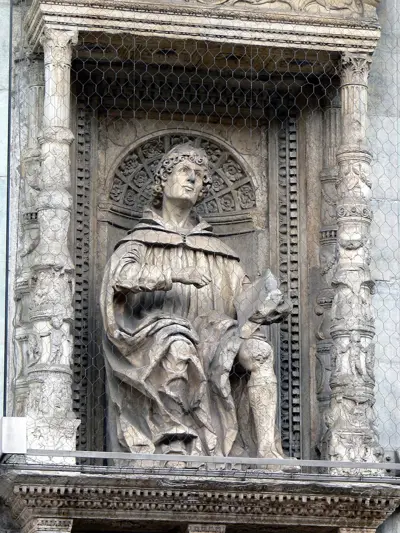
Gaius Plinius Secundus (AD 23/24 – 79), called Pliny the Elder (/ˈplɪni/), was a Roman author, a naturalist and natural philosopher, a naval and army commander of the early Roman Empire, and a friend of emperor Vespasian. He wrote the encyclopedic Naturalis Historia (Natural History), which became an editorial model for encyclopedias. He spent most of his spare time studying, writing, and investigating natural and geographic phenomena in the field.
