Ujjal Dosanjh Quotes
Canada cannot be the drugstore of the United States of America.
American’s were purchasing more and more of the medicines from Canada which had been doing a much better job of price controls on medicine that the United States had done. Some pharmaceutical companies were blackmailing the minister and Canada by threatening to limit the sales so that if Canadians exported drugs they might not have that drug for Canadian citizens.
Ujjal Dosanjh, Canadian Minister of Health, Quoted in New York Times, June 30, 2005
Sourced by: Eigen's Political and Historical Quotations


Despite huge lobbying and political pressure, Dr. Kelsey would not sign off on the drug initially because she found information on her own about Thalidomide that the company, Merrell, must have known about and didn't reveal to her and her staff or in their applications. She was aware that the drug had been approved by England, Canada, and many nations of Europe, but she saw little data in the Merrell submissions and responses and that made her suspicious, and caused her to demand more. During the time the company was to submit more data, the reports of the deformed newborns were starting to come in from the countries that had approved the drug. When she gathered that information, she rejected the application and prevented thousands or perhaps tens of thousands of children to be born with missing limbs because their mothers had been treated with Thalidomide. In 1962 she was awarded the highest civilian medal by President John F. Kennedy.


1st Baron Macaulay. This issue is still debated in America. Until the latter part of the 20th century, businesses could sell supposed medicines without any proof of efficacy or safety. The Government or others had to prove that there was something wrong with the product. Then, that shifted, and the burden of proof fell on the developer and seller of medicines as Macaulay favored, but sellers of vitamins and dietary supplements were exempted and operated under the previous American (anti Macaulay) position. Ironically, political opponents of requiring the drug company to prove safety and efficacy claimed that this was a radical new, untested idea that would inhibit development of medicinals. They did not realize that 150 years earlier, this was a standard, accepted point of view in England. Even into the 21st century, America operated with the inconsistent difference between vitamins and supplements, many of which have no beneficial effect whatsoever, and medicines.

If a state or community legally decides that a fetus is a person, there are many situations where there is a conflict of interest between the mother to be and the fetus. A pregnant woman, having a single drink of alcohol, potentially dangers the fetus (called Fetal Alcohol Syndrome). Smoking is clearly hazardous to the health of the fetus (underweight babies and more infant mortality and even more SIDS deaths. A diet to keep a mother thinner may not be nutritious for the fetus, A few states and local government have started prosecuting pregnant women for their personal behavior that might be detrimental to the fetus—often the purpose is to assert the right of the state to regulate the behavior of the pregnant woman so that the state can control abortion.

This scientific quotation is politically important because it defines the difficult problem of setting acceptable and safe environmental and work standards for air or water quality and contact with potentially toxic substances. As this quotation illustrates, everything is toxic if given in large enough doses. Table salt can kill a human if enough if ingested. Tiny amounts of even a poison will do no harm. What makes setting of standards still more complicated is that human beings differ in the amount of a substance it would take to produce a toxic reaction. Allergies are the best example, but the variability of sensitivity always exists.

This quotation is notable as it shows that problems that are not dealt with in one generation can continue for generation after generation. Today we have the exact same problem with overly expensive drugs. In a capitalistic system, every business with good products and sales should make profits. But products that people need to say alive, most people think, should not make larger profit percentages than almost any other business. But this problem is over half a century old in America.

It is not clear that Wright actually used these words of the first title or the editors created it. The substance is his and the second line is definitely his. At the time, the average American mistakenly thought that China had a much higher consumption rate.


The major killer diseases such as malaria and sleeping sickness are not contracted by Americans, and America is the only large country in the world where the Governments allow the drug companies to charge such high prices and make such huge profits. So any drug that Americans might pay for is a better potential profit generator than one that would be critical to the lives of millions where the governments to preserve lives would force the prices down or allow other companies to also make the drug. See {628648} for other factors affecting drug company priorities.
The “inflated prices” refers to the fact Americans pay more for pharmaceuticals than any other country in the world as the American government allows the companies to charge any amounts while other governments either negotiate or mandate much lower prices.


Observation of the number of pharmaceutical companies that raised the price over by huge percentages on one or more of their high selling, life preserving drugs. There were some who claimed that there was a plan by the pharmaceutical industry to take advantage of the fact that certain drugs were necessary to preserve life. The quotation however was an excellent description of how the general public makes decisions about many aspects of economics, crime, corruption, and many other aspects of our society. The principle not only seems to generally hold for negative things but also positives such as whether a government program is working or whether a company innovates great products.


precursor of the New Democratic Party.

In 1989 the company that owned the only drug that was helpful in treating AIDS had not yet made it available for children:

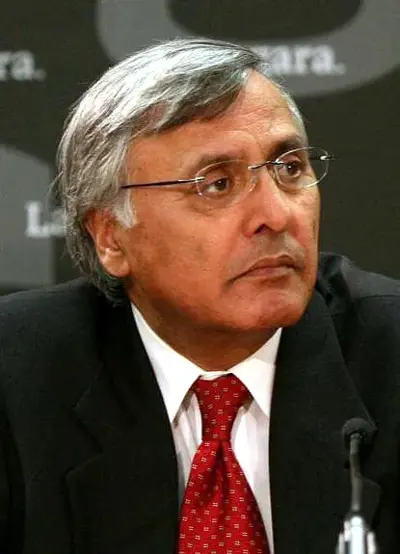
Ujjal Dev Dosanjh (Punjabi: ਉੱਜਲ ਦੇਵ ਦੁਸਾਂਝ) (/ˈuːdʒəl doʊˈsɑːndʒ/), PC QC is a Canadian lawyer and politician. He served as 33rd Premier of British Columbia from 2000 to 2001 and as a Liberal Party of Canada Member of Parliament from 2004 to 2011, including a period as Minister of Health from 2004 until 2006, when the party lost government. As a member of the Official Opposition from January 2006 until 2011, Dosanjh was variously the critic of National Defence, Public Safety, and Foreign Affairs, and sat on the Standing Committee on National Defence, the Committee on Public Safety and National Security, the Committee on Foreign Affairs and International Development, the Committee on the Canadian Mission in Afghanistan and the Committee on Justice and Human Rights. Dosanjh was one of four Visible Minorities to serve in Paul Martin's Ministry.
