Toomas Hendrik Ilves Quotes
Can the wider West establish a global 'cyber NATO?' It would be difficult, but so, too, was the founding of NATO itself, which was called into being only after successive communist coups in Eastern Europe.
Ilves, Toomas Hendrik. "The Cyber-Threat to Democracy." Project Syndicate, 15 Feb. 2017.


The reality of course was that NATO was created primarily to prevent Russia from dominating Europe. Baker could not officially state that. There are many experts who believe that if Russia had been allowed to join NATO after the breakup of the Soviet Union, relations with Russia may have been better. However, the NATO charter gives each member nation a veto over activities and there was little trust in Russia by most of the NATO members.


He was referring to NATO in Post WWII Europe.


Article 9 of the 1946 Japanese constitution that was imposed on Japan {604739} severely limited Japan’s military. Emperor Hirohito asked privately how Japan would be protected.

The Italian Communists were culturally and ideologically very different from the Russian Communists. The Italian view was a more nationalistic one and was closer to a Socialist Democracy than a “dictatorship of the proletariat”. Much more tolerant of diversity and not as ideological. Berlinguer and some of the other leaders realized that Italy was always in danger of a Russian takeover since there was such a difference in views about Communism. They had seen how the Red Army had become a political enforcement vehicle and they had been leaders of the fight to unseat Mussolini and wanted to avoid totalitarianism. They understood that NATO with its forces and nuclear umbrella was the only force that could keep Italy free of the Russians decided to move. This is one of the reasons why the Italian Communist Party was not banned in Italy.


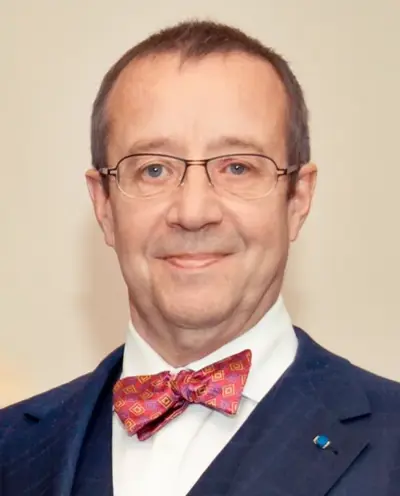
Toomas Hendrik Ilves is an Estonian politician who served as the fourth President of Estonia from 2006 until 2016. Ilves worked as a diplomat and journalist, and he was the leader of the Social Democratic Party in the 1990s. He served in the government as Minister of Foreign Affairs from 1996 to 1998 and again from 1999 to 2002. Later, he was a Member of the European Parliament from 2004 to 2006. He was elected as President of Estonia by an electoral college on 23 September 2006 and his term as President began on 9 October 2006. He was reelected by Parliament in 2011.
