Mikhail Gorbachev Quotes
You say that NATO is not directed against us, that it is simply a security structure that is adapting to new realities. Therefore, we propose to join NATO.
The reality of course was that NATO was created primarily to prevent Russia from dominating Europe. Baker could not officially state that. There are many experts who believe that if Russia had been allowed to join NATO after the breakup of the Soviet Union, relations with Russia may have been better. However, the NATO charter gives each member nation a veto over activities and there was little trust in Russia by most of the NATO members.
Mikhail Gorbachev, Russian President, Statement to U. S. Secretary of State, James Baker, Quoted in Mary Elise Sarotte,, “A Broken Promise?”, Foreign Affairs, September/October 2014
Sourced by: Eigen's Political and Historical Quotations


He was referring to NATO in Post WWII Europe.


The speech was the 50th Anniversary of the Speech that Secretary of State Byrne had given there exactly 50 years ago. It was referred to as the “Speech of Hope” and announced the Marshall Plan.
One major problem at the time was that the Soviet Union was supporting and instigating revolutions in many parts of the world. When most nations of the UN wanted to provide peace keeping troops to quell the conflict, the Russians would veto and block the effort, Vandenberg wanted the UN to change the rules regarding the veto. The original right of veto for the major nations was originally included at the insistence of the United States and many Americans did not want to give it up or have any exceptions lest there be more. The Russians at that time also did not want to give up any of their veto powers. Another method that Vandenberg wanted to solve the Russian peacekeeping blockage problem was for America to engage in more collective security pacts so that action could be taken without UN Security Council unanimity by going around the UN.


In a NATO military operation, there is one NATO Supreme Commander but each nation has a minister for NATO. All significant decisions must be consented to be this group. But each of those is a representative of a different political government. Clark was masterful at this diplomatic side of the war just as Dwight Eisenhower was in WWII. Eisenhower had bigger egos to content with—Churchill, Roosevelt, Stalin, De Gaulle, but Clark had many more counties who could each veto actions.


He was discussing the conflict in the Ukraine between keeping their historical economic relationships with Russia and being more involved with Europe and the West. He observed that the Ukraine has been for centuries not only and integral part of Russia but played a huge role in the Russian Revolution of 1917. Kissinger urged Ukraine independence and relations with both Russia and Europe and not making the Russians feel that they have little or no influence over what was not very long ago a critical part of their country.
In 2002, when Prodi made this offer on behalf of the EU, teh Russian economy was close to complete collapse, there was incufficient medicne available, the military was in disarray, and the EU thought that it could take advantage of Russia's weakness to offer them some economic benefits without the complications of even giving Russia the same degree of power and influence as Poland--Russia's former satellite. Russia's pride and dignity were offended. They rejected the arrangement and when Putin became President he began a very aggressive policy of pushback against NATO and EU expansion Eastward. Many political scientists feel that it would have been better had the EU not offered anything at all rather than the highly one-sided proposal that they made.

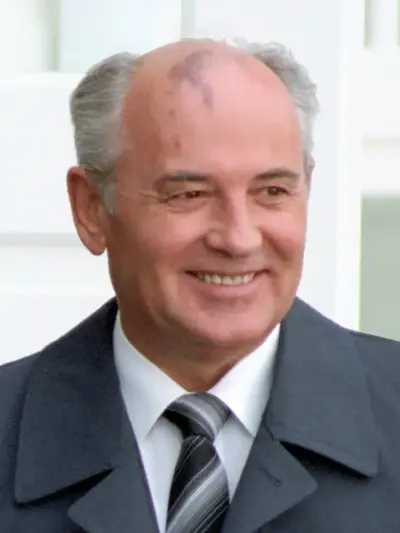
Mikhail Sergeyevich Gorbachev is a Russian and former Soviet politician. The eighth and last leader of the Soviet Union, he was the General Secretary of the Communist Party of the Soviet Union from 1985 until 1991. He was also the country's head of state from 1988 until 1991, serving as the chairman of the Presidium of the Supreme Soviet from 1988 to 1989, chairman of the Supreme Soviet from 1989 to 1990, and president of the Soviet Union from 1990 to 1991. Ideologically, Gorbachev initially adhered to Marxism–Leninism, although he had moved towards social democracy by the early 1990s.
