George F. Will Quotes
By pruning the EPA’s pretensions, the court has signaled a quickened interest in policing the separation of powers. If, as is desirable, the decision presages similar ones, they could, cumulatively, revive Congress by compelling it to resume its proper responsibilities. This would limit the excessive autonomy currently enjoyed by the executive agencies that are the increasingly autonomous, unleashed and unaccountable administrative state.
“The decision blocked the Environmental Protection Agency from claiming enormously consequential power that Congress did not clearly grant.”


The appropriations committee allocates the monitory appropriations of all the agencies and it is a large committee. The appropriations committee members read the reports of the committee with oversight over an agency and makes judgments about the appropriation size compared to what the agency committee has authorized. But with intelligence there is nothing of detail in the report so the appropriations committee have little or no idea of what they are appropriating money for. But the appropriations committee will not delegate the appropriation decision to the Intelligence Committee.


A veto power for the President would be absurd because


The view that the Supreme Court was the final arbiter of constitutional controversies was not held in early America.


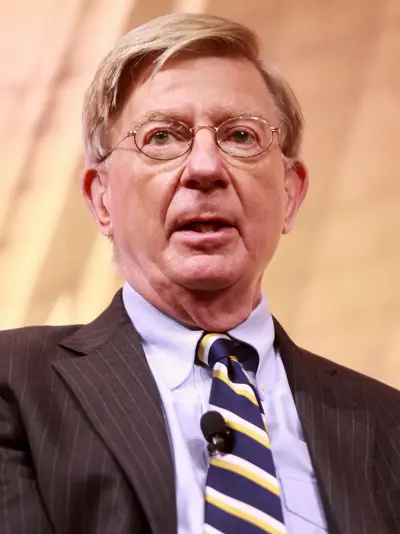
George Frederick Will is an American libertarian-conservative political commentator and author. He writes regular columns for The Washington Post and provides commentary for NBC News and MSNBC. In 1986, The Wall Street Journal called him "perhaps the most powerful journalist in America," in a league with Walter Lippmann (1889–1974). He won the Pulitzer Prize for Commentary in 1977.
