Jan Pietersz Coen Quotes
By experience you should be well aware that in the Indies trade has to be pursued and maintained under the protection of one's own arms and that the weapons must be financed through the profits so earned by trade. In short, trade without war or war without trade cannot be maintained.
Jan Pietersz Coen, 1587-1629, Governor General of the Dutch East Indies, Statement to the Board of Directors of the East India Company
Sourced by: Eigen's Political and Historical Quotations

Critics of this idea ask what we do when the minority of fanatic terrorists attack our troops and officials who have "brought" the rule of law to a "rogue state" like Somalia. Suicide bombers and others who want only the rule of Islamic Sharia law as opposed to rule of our law.


This quotation is often cited as it presages the concept of the Military Industrial Complex that was given by President Eisenhower in 1961--{641114}. It is not known whether Eisenhower had read or was briefed on this Mills quotation.


While Wilson is often thought of a humanist and a man committed to World peace and national rights of independence, he was also a committed economic imperialist. See {585454} for another example.


The United States is paying the military costs of the War on Terror. However by buying so much oil, a huge amount of our money goes to nations which are supporting and financing terrorism such as Libya and Iran. Even more money goes to Saudi Arabia which while it has trouble with terrorists of their own, follow a strategy that buys off terror groups by financing them directly and indirectly and finances Islamic fundamentalist educational institutions throughout the world which teach hate, intolerance and develops much support for Muslim Fundamentalist terrorists and in some cases finances the terrorism itself.


He was one of the last generation of military officers who did not have the education, training, and political sophistication to avoid picking one of the several factors for going to war, and making it seem that that was the most important or only one. Oil is always a factor in the Middle East, but there were other major causes for our going to war.

Turgot was one of the most advanced economic thinkers in Europe and realized, even before most of the Americans, that by freeing itself England, that the Americans would be forced to become free traders and that in turn would make America a major Economic power despite the fact that American economic policy over the years vacillated between protectionism and free trade.


This was written when the United States was not a dominant military power. At the beginning of the 20th century, the U. S. had the same size military as Argentina. It was France, German, Turkey and England who had the military superiority and it was they who tended to find excuses for war. After WWII, the U. S. was dominant and was involved with a number of wars and military incursions, often with nations that had not attacked the U.S. Korns’ principle was most dramatic when the George W. Bush administration invaded Iraq on the excuse that the Iraqis were developing weapons of mass destructions and then might attack the United States. After the successful invasion, the excuse was shown to be hollow as there were no signs of sophisticated weapons development.


3rd Earl Russell of Kingston. The military weak nations agreed with him, but the militarily strong ones did not—especially America and England which had the Atomic Bomb when others did not.

The Barbary Pirates had an incredible extortion racket going in the Mediterranean. If nations would pay them an annual sum each year, they would not attack and seize merchant ships of that country and sell the ships and goods while holding the sailors for ransom. President Jefferson had first dispatched American warships and authorized a major land operation which were very effective. Finally, a treaty was negotiated but Decatur reminded the Navy of what brought the Algerians to the negotiating table.
It certainly did.
The British Troops in this situation were new recruits who had not been trained well and were under the command of poor officers who uncharacteristically did not control their troops.
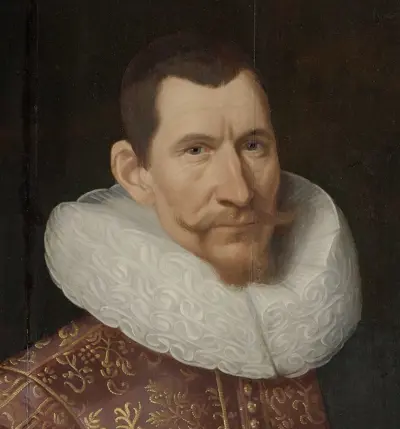
Jan Pieterszoon Coen was an officer of the Dutch East India Company (VOC) in the early 17th century, holding two terms as Governor-General of the Dutch East Indies. He was the founder of Batavia, capital of the Dutch East Indies. Renowned for providing the impulse that set the VOC on the path to dominance in the Dutch East Indies, he was long considered a national hero in the Netherlands. Since the 19th century, his legacy has become controversial due to the violence he employed, especially during the last stage of the Dutch conquest of the Banda Islands, in order to secure a trade monopoly on nutmeg, mace and clove.
