Benjamin Franklin Quotes
But they have two other Rights; those of sitting when they please, and as long as they please, in which methinks they have the advantage of your Parliament; for they cannot be dissolved by the Breath of a Minister, or sent packing as you were the other day, when it was your earnest desire to have remained longer together.
Franklin, Benjamin. The Papers of Benjamin Franklin, Vol. 16, January 1 through December 31, 1769. Edited by William B. Willcox, Yale University Press, 1972, p. 244.


This is the justification of virtually all legislatures that exempt their members from general requirements of law or grant them special privileges. Occasionally, the justification is warranted; most often, not.

The State of Wisconsin was very much against slavery. Opposing the Fugitive Slave Act, the state passed a Personal Freedom Act under which Wisconsin officials refused to return fugitive slaves as required by the Fugitive Slave Act. The Wisconsin Courts upheld the Wisconsin law citing, among other things, States’ Rights. The Taney Supreme Court which was strongly pro-slavery (a majority of the justices were Southern slaveowners) then overturned Wisconsin’s law. Taney’s opinion said that if there was to be Federal Supremacy in laws, there must be Federal Supremacy in enforcement of laws and in the decisions of the courts. The quotation is noteworthy for three reasons. First, it illustrates a certain hypocrisy that has existed over the issue of States’ Rights. The South, which is thought of as the bastion of the principle of States Rights were outraged that a Federal law that favored their slavery position would be “nullified” by a Northern state. So they claimed and fought for Federal supremacy and preemption at that time. However, when the Federal Government later passed laws controlling slavery and reconstruction, the South claimed that States’ Rights should prevail. The Northerners, who were the losers in this case, then later turned around and used the precedent to prevent the South from nullifying anti slavery and civil rights legislation. So it also illustrates that court decisions that are favored or opposed in one situation can cut the other way with a different set of facts. While there are those that believe the law should be above political considerations, there are others who use this quotation and its aftermath to illustrate that much of law is just a question of “whose ox is gored.”


This is a formal codification of the position that was made by the great orator Edmund Burke: {194922}.

The message was actually a threat in effect telling Parliament that if it did not pass the correct appropriations, the king might supplant them. He dissolved Parliament later that year. Note that the partisanship of the times was principally between the king and the parliament.

Theological & Legal Expert. A fatwa is a religious legal ruling

Though not very dramatic or succinct, this is a very important quotation in American History. The original drafters of the Constitution concentrated on limiting the powers of the executive—the role of the King. But the Congress had no limits placed on them. In Britain, to this day, the Parliament can do whatever they wish as there is no restraint on them other than their prudence and reasonableness. Madison used the example of the Alien and Sedition Acts—huge infringements on the rights of Americans—to show why the legislative branch must also be more restrained and limited. And that was the logic behind adding the Bill of Rights to our Constitutions.

Under Italian Fascism, the only person who determined what was or was not in the national interest was Mussolini himself.


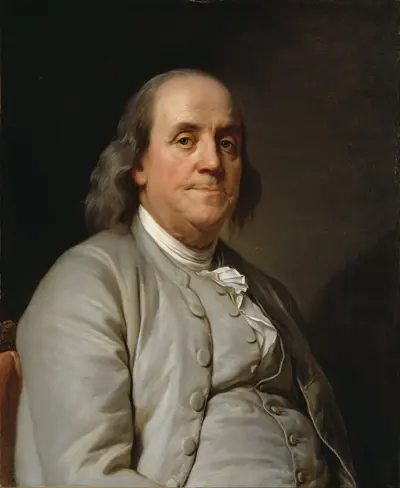
Benjamin Franklin FRS FRSA FRSE was one of the Founding Fathers of the United States. A polymath, he was a leading writer, printer, political philosopher, politician, Freemason, postmaster, scientist, inventor, humorist, civic activist, statesman, and diplomat. As a scientist, he was a major figure in the American Enlightenment and the history of physics for his discoveries and theories regarding electricity. As an inventor, he is known for the lightning rod, bifocals, and the Franklin stove, among other inventions. He founded many civic organizations, including the Library Company, Philadelphia's first fire department, and the University of Pennsylvania.
