Pablo Picasso Quotes
But they are useless. They can only give you answers
Interestingly, when Picasso was alive, this was a legitimate criticism. However since then, there have been several generations of development of hardware and software, and where the criticism is valid going into the 21st century, computers—with the right software—are beginning to ask questions, create hypotheses, suggest directions if inquiry, and organize concepts. There are even some which purport to function creatively.
Pablo Picasso, 1881-1973, Spanish Artist, Put down of computers
Sourced by: Eigen's Political and Historical Quotations


See {612638}, {620604}, & {620603} for the orders he refused. He was fired and ostracized from his position by the Young Turk Government. However, after the war, when the new government committed to holding a tribunal of the major war criminals, he was appointed to head the Commission of Inquiry. There were almost no experienced jurists and administrators in Turkey who did not participate in the Armenian Genocide and were credible to lead the attempts at justice. See {620596} and {620595} for the triggers to establishing the commission. In the final analysis, there were a few tried and one governor of a province was hanged and a few others received short jail sentences.


The warlord flipped back and forth between the Communists and the Autocrat, Chiang Kai-shek’s Kuomintang government fending both off so that he could rule his province as he wished. It illustrates that when the Kuomintang and the Communists accused each other of allying themselves with brutal warlords, they were both right. In the quest for victory in the Chinese Civil War, both sides made a mockery of their “principles”.


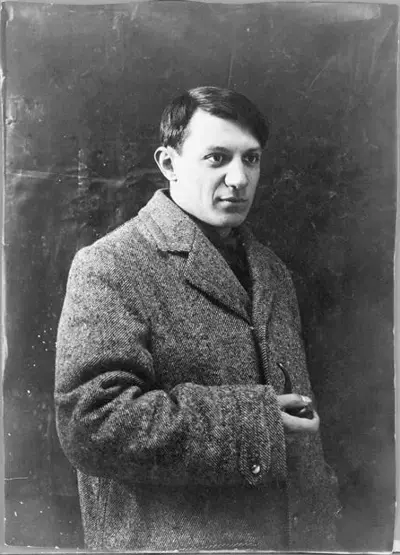
Pablo Ruiz Picasso was a Spanish painter, sculptor, printmaker, ceramicist and theatre designer who spent most of his adult life in France. Regarded as one of the most influential artists of the 20th century, he is known for co-founding the Cubist movement, the invention of constructed sculpture, the co-invention of collage, and for the wide variety of styles that he helped develop and explore. Among his most famous works are the proto-Cubist Les Demoiselles d'Avignon (1907), and Guernica (1937), a dramatic portrayal of the bombing of Guernica by German and Italian air forces during the Spanish Civil War.
