Alex Haley Quotes
But then, as far as I know, as far as I've studied or heard or picked up, it seems that this type of thing is a curse against mankind.
Haley, Alex. Interview by Murray Fisher. Playboy, Jan. 1977, p. 71.


Traffic fatalities had been growing ever since the production of the automobile. See Stalin {616657} for another statement about large numbers of deaths. Today, for example, the death of 3 American soldiers in a day produces page one news. An airplane crash that kills 10 people will dominate the news, while on that same day 117 Americans will have been killed in automobile traffic deaths “diffused in time and space”.

Both knew that this proved an atomic bomb was possible. It was Szilard’s message about the possibilities about the atomic bomb that Albert Einstein transmitted to FDR, leading to the American development of the bomb.

This was the worst storm that hit the East Coast that anyone could remember. Despite the Governor’s shock, he and the other East Coast Governors together with the Federal and local governments performed magnificently keeping the fatalities very low considering the ferocity of the storm and the tens of millions of people affected.


This quotation is fascinating and illustrates the depth and complexity of the problem facing Abraham Lincoln. Howell actually used the word “evil” to describe the abolitionists and their political efforts end slavery. He and other slave holders did not see slavery and the murder, brutality, and torture that went with it as evil. After the Presidential years of James Buchanan who protected the South from slavery reform and abolition as the North was gaining political power and the abolitionists were having a greater and greater effect on public opinion in the North. While Southerners did not believe Lincoln would emancipate the slaves, they realized that the majority of the growing nation was opposed to slavery, and more and more Northern states were passing laws making any slave who sets foot in the State a free person. Slaves could not only have more reason to run away, but slave owners would not be able to get their “property” back. Lincoln would not help the South as Buchanan did, and the Southerners realized that over time, slavery would no longer be feasible or profitable. Cobb, very experienced at Washington politics, realized the changes that would come and thought that they would be “certain and speedy.”—see {620555}. Lincoln had been elected a month earlier and without Buchanan as President to protect the institution of slavery, the anti-slavery majority of the country would prevail unless the South seceded. Cobb was one of the strong advocates. 6 days later, the Georgia legislature called for a convention to debate secession. The irony was that if the South had not seceded and simply dragged its feet legislatively, it would have taken two or three decades for slavery to end. However, by seceding and initially fighting so hard and well while weak Union generals were in command, Lincoln was forced to try more drastic measures and issued the Emancipation Proclamation after only a few years. The Civil War and secession was not only a tactical and strategic error for the South, but rapidly brought about just what the Southerners were fighting to prevent.


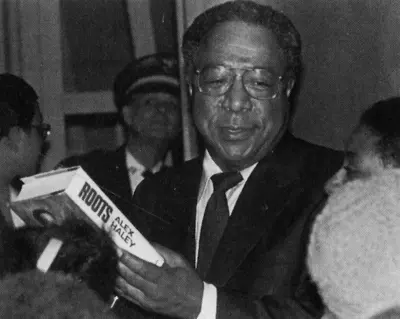
Alexander Murray Palmer Haley was an American writer and the author of the 1976 book Roots: The Saga of an American Family. ABC adapted the book as a television miniseries of the same name and aired it in 1977 to a record-breaking audience of 130 million viewers. In the United States, the book and miniseries raised the public awareness of black American history and inspired a broad interest in genealogy and family history.
