T Bone Burnett Quotes
But my point is these Civil War songs were gruesome. The hatred that's so bad in this country today, and for the past 10 or 15 years, bad as it is, is nothing compared to the kind of things people would write down and sing back in the Civil War.
Sachs, Lloyd. T Bone Burnett: A Life in Pursuit. University of Texas Press, 2016.


This is a wonderful quotation which illustrates the polarization which had taken place in America as a result of the slavery issue. Lincoln’s address—which history and most people have adjudged to be such a moderate attempt to find common ground, and which offended many of his constituents because he was compromising and temporizing on the slavery issue—was seen as the radical attacks of a “fanatic”. There is probably no policy that Lincoln or any other President could have followed that would be even marginally acceptable to the slave owners and their economies and the abolitionists and their economies. In the final analysis, slavery was the kind of issue that is not susceptible to compromise. No nation can exist half slave and half free. The Civil War was inevitable unless the South would give up slavery or the North would accept it.

After attending a Lincoln speech, Booth said to Lewis Powell, one of his band of conspirators, “Now, by God, I’ll put him through. That is the last speech he will ever make.”


More new technology was deployed in the Civil War than any other war in history and Moltke did not realize that the classic European military tactics were obsoleted. However, neither did most of the Southern Generals and many of the Union Generals. Lincoln, Grant and Sherman were the ones who developed strategies and tactics to function in the new world of warfare.

The Confederates were very clear that slavery was the cause of the war. Revisionists later tried to add other motives to the Southern cause, but Grant and all the contemporaries on both sides knew slavery was the crux of the matter. So the Confederate cause was the right to brutalize, torture, and even kill an unwilling labor force that was unpaid. No war in history had ever been fought for such a lowly cause and the Confederate leadership skills were amazing in keeping up morale without a decent cause to fight for.


The critic observed that the South would not give up their slaves voluntarily and that and that vigorous abolition pressure on the South would lead to war and asked Angelina if she would want a civil war. Grimke’s response was predictive of what happened—the most terrible was in U. S. History to end the most terrible cruelty and persecution in American history. Note that she herself was willing to die to end slavery. See {629094}.

Pandita Indrani Rampersad. She is the first Hindu woman who ever became a pundit—a religious expert who guides Hindus. She is also a professor in the United States.

Phelps was a Copperhead Democrat who was a virulent racist, an enemy of Lincoln and supported McClellan against Lincoln in 1864. His extreme disrespect for the President and his racism was not appreciated in Vermont, and Phelps not only failed to help McClellan but destroyed his own credibility in his home state of Vermont. Phelps had been practicing law in New York City where there was a large Copperhead, racist and anti-Lincoln part of the population there.


The Birth of a Nation was screened at the Woodrow Wilson White House as Wilson was the most racist president since Andrew Johnson. The editorial was persuasive to Boston liberals who were not prepared to impose censorship even to prevent racist propaganda from having an audience.


See Mark {606304}; also Matthew {606727}. Lincoln had used the “house divided” biblical metaphor in 1843 when arguing for Whig solidarity. The first political use of the Biblical metaphor and quotation with respect to American slavery appears to have been by Sam Houston in 1850 {603970}. The first use with respect to American slavery was byMassachusetts abolitionist, Edmund Quincy, in 1852. The second sentence of this famous quotation was forsaged earlier. See Lincoln, {619494} & {584918}. Also See Felix Rohatyn who used the Lincoln line to refer to poverty: {70611}.

Resentment over the Southern loss of the Civil War did not dissipate. Hatred and anger were taken out on any Northerner who appeared. The local politicians not only didn’t keep the peace but they were the instigators of much of the violence and made sure that no Southerner would be convicted for violence against a Northerner. The President however, a Southerner himself, vacillated as to how to deal with the situation and lawlessness over reconstruction and race issues was encouraged throughout the South leading to almost 100 years of lynchings, Ku Klux Klan and other violence and intimidation.

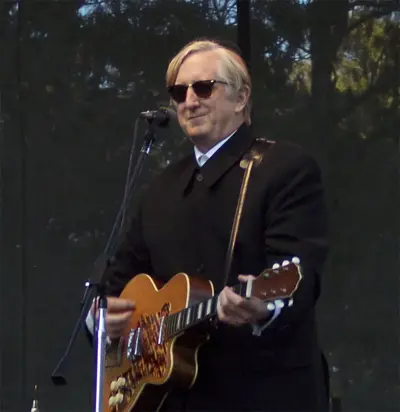
Joseph Henry "T Bone" Burnett III is an American record producer, musician, and songwriter. Burnett rose to fame as a guitarist in Bob Dylan's band during the 1970s. He has received multiple Grammy awards for his work in film music, including for O Brother, Where Art Thou? (2000) Cold Mountain (2004), Walk the Line (2005), and Crazy Heart (2010); and won another Grammy for producing the studio album Raising Sand (2007), in which he united the contemporary bluegrass of Alison Krauss with the blues rock of Robert Plant.
