Alfred Marshall Quotes
But if inventions have increased man's power over nature very much, then the real value of money is better measured for some purposes in labour than in commodities.
Marshall, Alfred. Principles of Economics. 8th ed., Macmillan and Co., 1920, p. 62.


The alternative would have been for the colonies to borrow English money at high interest rates and use that. Or use money from private banks (which occurred later.) Many conservatives are today a little shocked that some of the American Colonies just printed money with no backing but it worked—at least at the local level. A Boston Bank for example, would take a large commission for a Bostonian to convert Pennsylvania money into Massachusetts money. So it was not a very good system for trade between colonies and International trade. But English money was used for that. The colonists pragmatically got the “best of both worlds” and paid as little interest as they needed to. This system is essentially what we use today on a national scale with no gold or silver backing of the money.


What Franklin Delano Roosevelt began, President Nixon would in 1971 complete by removing America from the gold standard entirely and ending fixed rates of exchange. There have been those in government who did not understand the modern economics of money and who believed that currency had to have a fixed rate of exchange for gold or silver otherwise it was worthless. Roosevelt had to deal with them as did Nixon later. Even into the 21st century when it had been amply demonstrated that the best currency in the world was the United States dollar precisely because it was backed up by the full faith and credit of the United States Government, there were those who complain that United States money is not sound currency and argue for the return of the gold standard.
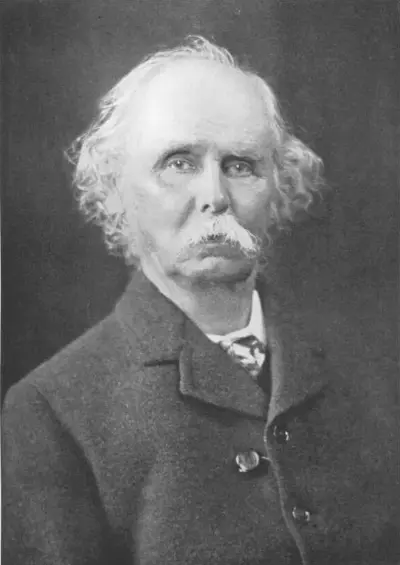
Alfred Marshall FBA was an English economist, who was one of the most influential economists of his time. His book, Principles of Economics (1890), was the dominant economic textbook in England for many years. It brings the ideas of supply and demand, marginal utility, and costs of production into a coherent whole. He is known as one of the founders of neoclassical economics.
