Peter Kropotkin Quotes
But how do European railways manage without them? How do they continue to convey millions of travellers and mountains of luggage across a continent? If companies owning railways have been able to agree, why should railway workers, who would take possession of railways, not agree likewise? And if the Petersburg-Warsaw Company and that of Paris-Belfort can act in harmony, without giving themselves the luxury of a common commander, why, in the midst of our societies, consisting of groups of free workers, should we need a Government?
Kropotkin, Peter. The Conquest of Bread. G. P. Putnam's Sons, 1906, p. 170.


The speech was never actually delivered, but instead the Bishop published it. It received wide distribution including in America where it was published by the Maryland Gazette on September 29, 1774.


Lieber is best known because he was assigned by President Lincoln to study the then international laws of war and prepare a manual for the guidance of union troops in the Civil War. Lincoln then issued the document as a general order.


Not only did the people in Afghanistan have very little experience with central government, but they had little history of government of any sort. There were loose tribes somewhat unified by culture, but there was little or no tribal government. The same with clans. Each Afghanistan male was his own ruler over his wives and children in a family centric society. While virtually all were Muslim, there was no hierarchy or structure of the clergy in that society.

There was huge pressure on the central government to decentralize as they held all the power in Indonesian society. However, if they devolved power to the Provinces (States), many of them could be large enough and independent enough to secede and become an independent country as East Timor had done. So the Indonesian power structure bypassed the Provincial governments and devolved power directly to the local governments, none of which was independent enough to go it alone. The desired objective was met—no more secessions. However, there was no one to worry about regional and national issues and problems as the politicians who had power were all local. The country was becoming non-functional in many ways.


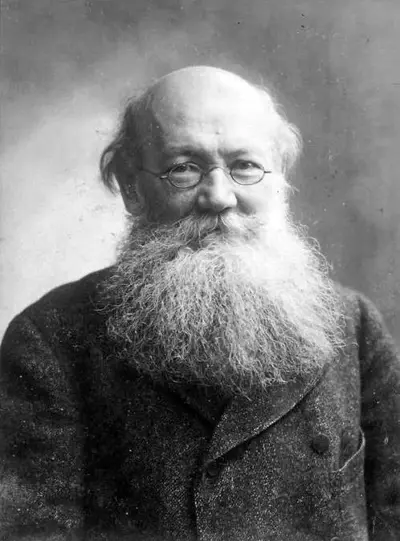
Pyotr Alexeyevich Kropotkin was a Russian anarchist, socialist, revolutionary, economist, sociologist, historian, zoologist, political scientist, human geographer and philosopher who advocated anarcho-communism. He was also an activist, essayist, researcher and writer.
