Nat Hentoff Quotes
[Bill Clinton] was the man, as a matter of fact, who, in terms of the Communications Decency Act, which would have made the Internet, the whole concept of cyberspace, vulnerable to rampant censorship - he pushed that bill, and I know the man in the Justice Department whom he persuaded - the guy didn't want to lose his job - to write the bill.
Hentoff, Nat. Interview by Brian Lamb. Booknotes, C-SPAN, 2 Nov. 1997.


This seemingly logical inconsistency is actually typical of many nations and cultures that practice censorship. Freedom in this is a concept of a limited freedom—limited to what is reasonable, not harmful, not offensive. So all are free to behave within a circumscribed set of norms. By this logic, freedom is not being curtailed if the state acts to stop activity beyond those norms. Every nation accepts this principle to some extent. In America one “cannot should fire in a crowded theater” but there are very few other restrictions. But in Germany, Israel and other modern Industrial democracies there is censorship of material that promotes ethnic hatred whereas in the U. S. that is protected from censorship. In China many sites on the Internet have material that is regarded as inflammatory, or slanders the government and this is bad because people might lose confidence in their government. So freedom of speech and censorship issues are matters of degree with the United State being at one end of the scale and North Korea and Saudi Arabia being at the other end. China has been moving from the North Korean end of the scale towards the middle.


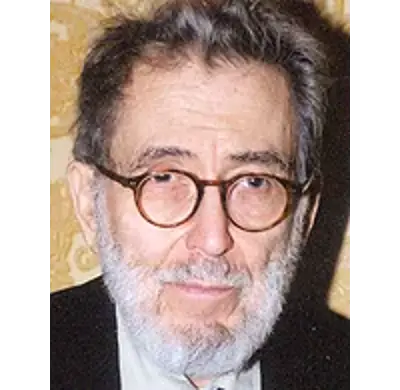
Nathan Irving Hentoff was an American historian, novelist, jazz and country music critic, and syndicated columnist for United Media. Hentoff was a columnist for The Village Voice from 1958 to 2009. Following his departure from The Village Voice, Hentoff became a senior fellow at the Cato Institute and continued writing his music column for The Wall Street Journal, which published his works until his death. He often wrote on First Amendment issues, vigorously defending the freedom of the press.
