John Updike Quotes
The Internet doesn't like you to learn too much about explosives.
Updike, John. Terrorist. Alfred A. Knopf, 2006.


See {583139} for the Twitter point of view.

The Solicitor General had asked the Supreme Court in 1971 to prohibit the New York Times from publishing The Pentagon Papers on the grounds of national security. Later he wrote:


This seemingly logical inconsistency is actually typical of many nations and cultures that practice censorship. Freedom in this is a concept of a limited freedom—limited to what is reasonable, not harmful, not offensive. So all are free to behave within a circumscribed set of norms. By this logic, freedom is not being curtailed if the state acts to stop activity beyond those norms. Every nation accepts this principle to some extent. In America one “cannot should fire in a crowded theater” but there are very few other restrictions. But in Germany, Israel and other modern Industrial democracies there is censorship of material that promotes ethnic hatred whereas in the U. S. that is protected from censorship. In China many sites on the Internet have material that is regarded as inflammatory, or slanders the government and this is bad because people might lose confidence in their government. So freedom of speech and censorship issues are matters of degree with the United State being at one end of the scale and North Korea and Saudi Arabia being at the other end. China has been moving from the North Korean end of the scale towards the middle.
_0_thumbnail_47x47.jpg)
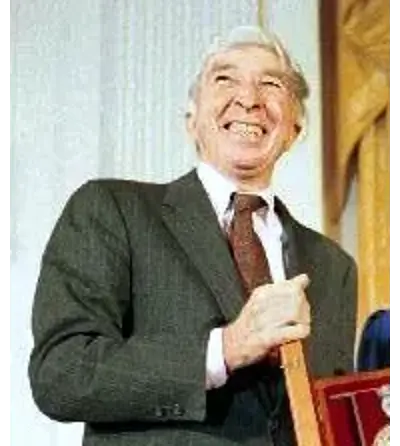
John Hoyer Updike was an American novelist, poet, short-story writer, art critic, and literary critic. One of only four writers to win the Pulitzer Prize for Fiction more than once (the others being Booth Tarkington, William Faulkner, and Colson Whitehead), Updike published more than twenty novels, more than a dozen short-story collections, as well as poetry, art and literary criticism and children's books during his career.
