John Perry Barlow Quotes
In Cyberspace, the First Amendment is a local ordinance.


This seemingly logical inconsistency is actually typical of many nations and cultures that practice censorship. Freedom in this is a concept of a limited freedom—limited to what is reasonable, not harmful, not offensive. So all are free to behave within a circumscribed set of norms. By this logic, freedom is not being curtailed if the state acts to stop activity beyond those norms. Every nation accepts this principle to some extent. In America one “cannot should fire in a crowded theater” but there are very few other restrictions. But in Germany, Israel and other modern Industrial democracies there is censorship of material that promotes ethnic hatred whereas in the U. S. that is protected from censorship. In China many sites on the Internet have material that is regarded as inflammatory, or slanders the government and this is bad because people might lose confidence in their government. So freedom of speech and censorship issues are matters of degree with the United State being at one end of the scale and North Korea and Saudi Arabia being at the other end. China has been moving from the North Korean end of the scale towards the middle.


Pirate Party has spread throughout Europe and has started to win political elections for European legislators. Pirate Parties support civil rights, direct democracy and participation, reform of copyright and patent law, free sharing of knowledge (Open Content), data privacy, transparency, freedom of information and free education.


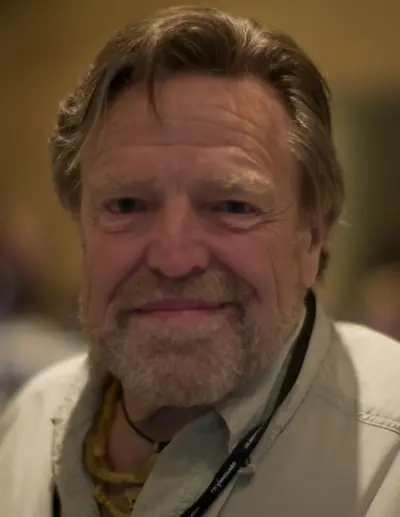
John Perry Barlow was an American poet, essayist, cattle rancher, and cyberlibertarian political activist who had been associated with both the Democratic and Republican parties. He was also a lyricist for the Grateful Dead and a founding member of the Electronic Frontier Foundation and the Freedom of the Press Foundation. He was Fellow Emeritus at Harvard University's Berkman Klein Center for Internet & Society, where he had maintained an affiliation since 1998.
