Jimmy Reed Quotes
Big boss man, can't you hear me when I call? You ain't so big, you're just tall.
Reed, Jimmy. "Big Boss Man." Found Love, Vee-Jay Records, 1960.


Dwight D. Eisenhower had become President of Columbia University. At one of his first meetings with the Faculty Senate, Eisenhower in response to a question stated that the University could not countenance such a policy. At this point, Professor Highit, the Dean of the Faculty Senate, interrupted Eisenhower with this legendary quotation. At Columbia as well as many other of the best private universities, it is the faculty Senate that is the highest educational policy making organ. See {634253} for one of the origins of this. Eisenhower and the University were both great but they were a bad fit. Some historians believe that it was the bad experience at Columbia that brought Eisenhower into Presidential politics. If he had been successful at Columbia, he might have stayed there for his career.

History is replete with instances of military coups. In the final analysis, in every country at all times, there is no force in a society that could cope with a military which decides to act on its own. The Founding Fathers were very conscious of this reality and history, hence the firm civilian control of the military in America.


In one of the most blatant statements of the arbitrary power of congressional committee chairmen, the chairman of the House Rules Committee blocked an investigation of military procurement even though every other member of the committee wanted to pursue the investigation. The prerogative of the chairman was upheld by the Speaker, and on appeal, by the House as a whole, but by 1924 House rules were amended to diminish the arbitrary power of chairmen.


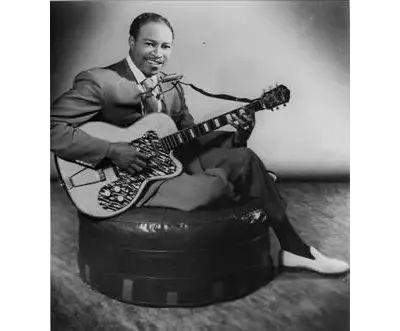
Mathis James Reed was an American blues musician and songwriter. His particular style of electric blues was popular with blues as well as non-blues audiences. Reed's songs such as "Honest I Do" (1957), "Baby What You Want Me to Do" (1960), "Big Boss Man" (1961), and "Bright Lights, Big City" (1961) appeared on both Billboard magazine's rhythm and blues and Hot 100 singles charts.
