Franz Kafka Quotes
Beyond a certain point there is no return. This point has to be reached.
Franz Kafka, 1883-1924, Austrian Writer, Quoted in Max Lerner, The Unfinished Country: A Book of American Symbols, 1959
Sourced by: Eigen's Political and Historical Quotations


Menander first originated the phrase. However, Julius Caesar made it famous, by stating it when he crossed the Rubicon River with his Legions and headed for Rome. He had passed the “point of no return.” It was forbidden for a Roman commander of legions to allow the legions under arms to come that close to Rome under the theory that no military commander could take over the government if his legions were at a distance from Rome. Caesar was indeed marching on Rome with his troops, and took over the government. The great phrase implied that the key action had been taken and the commitment made. The dice was thrown but no one know yet what the results would be. For Caesar, they turned out to be good. Dice was a very good metaphor for the era as Greek and Roman men played (and gambled) on dice games frequently. John Adams used a variant of the quotation in castigating President Taylor. See {622034}


Honore Gabriel Victor Requiti


This is true fir government even more so than business. Politicians tend to focus on policy making and having vision, but most policy visions fail for lack of execution.
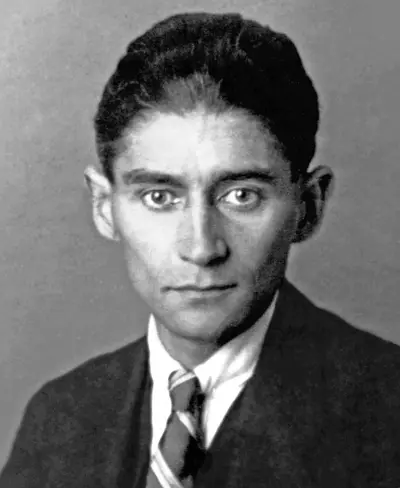
Franz Kafka was a German-speaking Bohemian novelist and short-story writer, widely regarded as one of the major figures of 20th-century literature. His work fuses elements of realism and the fantastic. It typically features isolated protagonists facing bizarre or surrealistic predicaments and incomprehensible socio-bureaucratic powers. It has been interpreted as exploring themes of alienation, existential anxiety, guilt, and absurdity. His best known works include "Die Verwandlung" ("The Metamorphosis"), Der Process (The Trial), and Das Schloss (The Castle). The term Kafkaesque has entered the English language to describe situations like those found in his writing.
