Chuck Grassley Quotes
If heads don’t roll, nobody makes any changes
Compare this quotation with {632899}. Most members of Congress had limited management experience and the only solution to an organizational problem was to fire people. The referenced quotation has people fired for the purpose of inspiring public trust; in this quotation, it is to trigger reform and change. Ironically, there is no evidence in the management literature that suggests that firing for either of these reasons will have the desired objective.
Charles Grassley, U. S. Senator (Republican, IA), Statement as a Senate Committee, Quoted on PBS Frontline, May 21, 2013
Sourced by: Eigen's Political and Historical Quotations

Compare this quotation with {632907}. Most members of Congress had limited management experience and the only solution to an organizational problem was to fire people. The referenced quotation has people fired to trigger reform and change; in this quotation, it is for the purpose of inspiring public trust. Ironically, there is no evidence in the management literature that suggests that firing for either of these reasons will have the desired objective.

An American ambassador and 3 staff had been killed in a terrorist attack on our Consulate in Bengasi, Libya. The CIA and the rest of the American intelligence had initially analyzed the event and gave a report to the Administration “explaining” the event. American officials who did not see the incorrect intelligence report, hypotheses that it was a planned terrorist attack which it appeared to be from the news reports read by amateurs, However, the United Nations Ambassador was given the incorrect report and was asked by the White House to appear on the News Shows, reveal the contents of the report and state that this was a preliminary analysis and subject to change upon further data and analysis. She did that, but many journalists and politicians thought that her version did not comport with the facts. Soon it was discovered that the initial Intelligence report was all wrong and not even close to the truth and the people who guessed from the press reports had gotten it right. Graham and other members of Congress were very angry. So Graham made a public announcement stating the U. N. Ambassador was unfit for a senior job as she either lied to the country of was too naïve to see the truth which so many others had seen. There were dozens of people who might have either made a mistake or were otherwise responsible for the erroneous report which in hindsight appeared very flawed. At the top of the list was the CIA Director who had been America’s best heroic and victorious general who had recently taken the post and was very popular. So Graham and some of his fellow members of Congress called for the head of the one person involved and at a high level who had NOTHING to do with preparing and approving the wrong and misleading intelligence report and did not cast blame on any of the people who made the error or approved it. The quotation is typical of members if Congress who, insist on having the public stage before they know most of the facts, have little idea of how to manage anything, pick the easiest target to attack without worrying top much about the real culprits if any, and the lack of courage enough to blame a very powerful figure who if he did not personally err, the problem occurred on his watch. See {625924} for a view of the courage of Congressmen. Graham was actually a much better than average Senator, at the time but Congress had a 90% disapproval rating with the citizens.

Ironically it was the old Chinese culture of the Emperors where public official mistakes were generally paid for with the official’s life. However, there is a tendency the world over for the public to demand someone to be punished or fired. Often the easiest way for a politician with administrative responsibility to blunt that responsibility is to fire some subordinates or demote or otherwise punish them. In Taiwan they have a demerit system. The leader must take the responsibility for the failure. Many politicians (and business executives) observe that there are thousands of subordinates and that they cannot be held responsible for the errors that any of them make. While the do not want the responsibility, they are the first to claim the credit if anything goes right. If an employee should be fired, then do so, but as this quotation observes to meet out discipline in response to criticism is reprehensible.


Coming to politics after a very successful career in business, Bloomberg lacked many of the typical politician’s skills, but was a superb manager of the city.


Most societies have debated the relative roles of authority and accountability in government operations. Most appointees and civil servants complain that authority is too concentrated at the top—that they do not have enough authority to do their jobs properly. Meanwhile. Most citizens and service recipients complain that the officials and civil servants are not accountable and should not be given much authority. In this hypothetical society of the future, Doc Smith depicts what would happen if BOTH of these complaints were addressed totally. Most of the people who complain about the existing systems find that they have to be careful of what they wish for. Solving these problems might create a world that is far worse.

This is true fir government even more so than business. Politicians tend to focus on policy making and having vision, but most policy visions fail for lack of execution.

While he was referring to Civil Servants, the principle is generally true for all workers.
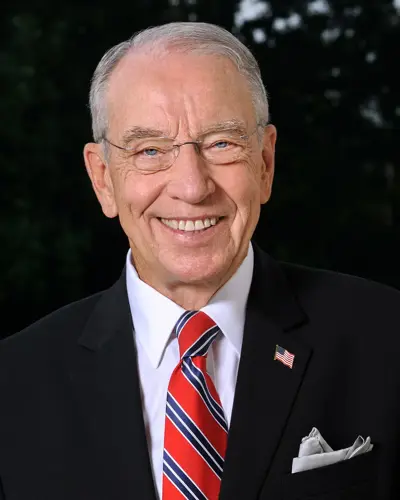
- Born: September 17, 1933
- Nationality: American
- Profession: Politician
Charles Ernest Grassley is an American politician serving as the president pro tempore emeritus of the United States Senate, and the senior United States senator from Iowa. He is in his seventh term in the Senate, having first been elected in 1980.
