Hjalmar Branting Quotes
Before the war there were many who were more or less ignorant of the international labor movement but who nevertheless turned to it for salvation when the threat of war arose. They hoped that the workers would never permit a war.
Branting, Hjalmar. "Fraternity Among Nations." Nobel Lectures, Peace 1901-1925, edited by Frederick W. Haberman, Elsevier Publishing Company, 1972, pp. 325-333.


He had been exiled to the United States.

Stalin was then only 26 years old. This was more than a decade BEFORE the Russian Revolution and Stalin was a young left wing revolutionary planning how to bring about a revolution and how the society should operate thereafter. He was then much the youthful, intellectual, Georgian idealist.


The unions that broke off were very successful at increasing union membership and made large efforts at organizing. The others were losing members for the most part and devoted most of their resources to politics to protect what they had.


The then Vice President was accosted on the train by southerners who believed that he was on his way to his home state of Tennessee to persuade the legislature not to secede from the union. Amid cries to hang him and after he was punched by one of the mob, ex-Senator Wigfall—the man who had received the surrender sword at Sumter, who was also on the train, persuaded the crowd to hear Johnson out. Johnson thus began his speech which was potentially for his life, but never wavered from his view that secession was a mistake. Most of the crowd calmed down and as the train pulled out, they let him go though there were still a few shouts for “hanging.” There was no secret service protection for the President or vice President at the outbreak of the Civil War. Pinkerton had organized some informal protection for the President and thwarted some plots, but it was the Vice President who was attacked first. And there was not sufficient protection to prevent Lincoln’s assassination.


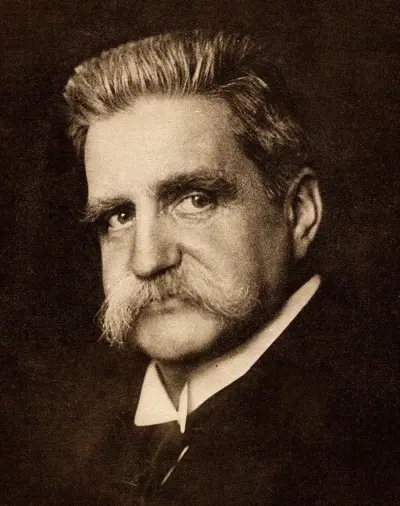
Karl Hjalmar Branting was a Swedish politician who was the leader of the Swedish Social Democratic Party (1907–1925) and Prime Minister during three separate periods (1920, 1921–1923 and 1924–1925). When Branting came to power in 1920, he was the first Social Democratic Prime Minister of Sweden. When taking office for a second term after the general election of 1921, he became the first socialist politician in Europe to do so following elections with universal suffrage. In 1921, Branting shared the Nobel Peace Prize with the Norwegian secretary-general of the Inter-Parliamentary Union Christian Lous Lange.
