Joseph Stalin Quotes
… if the proletariat is to achieve victory, all the workers, irrespective of nationality, must be united. Clearly, the demolition of national barriers and close unity between the Russian, Georgian, Armenian, Polish, Jewish and other proletarians is a necessary condition for the victory of the proletariat of all Russia.
Stalin was then only 26 years old. This was more than a decade BEFORE the Russian Revolution and Stalin was a young left wing revolutionary planning how to bring about a revolution and how the society should operate thereafter. He was then much the youthful, intellectual, Georgian idealist.
Joseph Stalin, 1879-1953, Russian Premier, “The Social-Democratic View on the National Question”, September 1, 1904
Sourced by: Eigen's Political and Historical Quotations


Ironically, this view was also held by many of the capitalist “Captains of American Industry” who believed that all unions were revolutionist regardless of the views of the union’s membership or leadership. Even today, there are some who still equate trade unionism with communism and revolution. The majority of the unions and the left never believed that, but the extreme communists and extreme capitalists did than and some do today.


There were massive strikes in Italy. These strikes began in the engineering factories and soon spread to railways, road transport, and other industries. The strikers, however, did more than just occupy their workplaces, they seized them for themselves. Soon 500,000 strikers were at work, producing for themselves. The question was what next. Malatesta and others recommended that they go on and take over the government and not just try and have better labor conditions and factory operations. See {616350}. He warned that the capitalists and middle class bourgeoisie had been so frightened by the successful national strike that they would even ally with the Fascists who they did not like either. That is how Mussolini and his Fascists came to power.


The Cuban dissidents and the CIA had assured President Kennedy and the Joint Chief’s of Staff that as soon as the CIA organized troops landed there would be uprisings throughout Cuba and the invaders would be supported by the Cuban people, happy to overthrow Castro. After the landing, there was not a single uprising nor was there any assistance provided to the invaders who were easily captured by Castro’s men. Castro was very popular. The CIA and Cuban dissidents were guilty of wishful thinking.

Vladimir Lenin. Most did not and the Communist government was brutal and murderous in forcing them into the Communist culture, outlook, and behavior. See {640096} for a description of some of the effort.


Comintern was upset by the American Socialist Party because the party had rejected the 21 Conditions for Affiliation and withdrew their intent to join the Third International. To Comintern, the Socialist Party was a party of “bourgeois socialism.”


This was a great victory for the Victor Berger wing of the party. They purged the violence advocates and communists from the party. Despite this, a few right wingers call any socialist a communist and a revolutionary.


This is surprising to most Americans who thought that the Communists would have been afraid to allow citizens to have guns. Some American gun advocates have wanted laws to require∫∫ all people in an area to own guns. Ironically, they have no use for Communists and would find it amazing that the Communists agreed with them while most of America did not. This Article of the Russian Constitution of 1918 is used by gun control advocates to prove that the oft claimed “fact” that only free governments dare to allow their citizens to be armed is not a fact at all. but just another false generalization. Other modern counterexamples are many of the Arab dictatorial nations also allow their population to be armed. The tradition is so strong that the tyrants dare not try and disarm the population.
Vladimir Lenin. Globalization and international competitiveness made this even worse a century later.
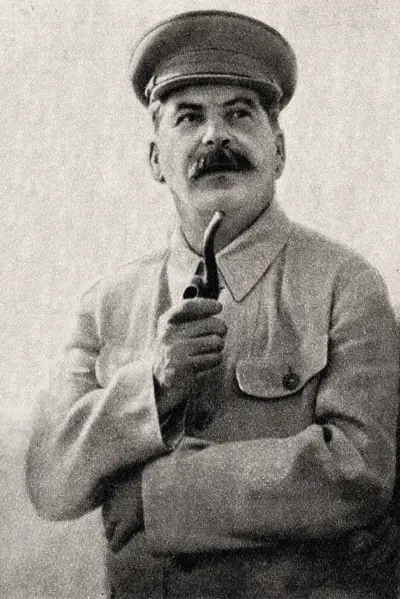
Joseph Vissarionovich Stalin was a Georgian revolutionary and the ruler of the Soviet Union from 1927 until 1953. He served as both General Secretary of the Communist Party of the Soviet Union (1922–1952) and Chairman of the Council of Ministers of the Soviet Union (1941–1953). Despite initially governing the country as part of a collective leadership, he ultimately consolidated power to become the Soviet Union's de facto dictator by the 1930s. A communist ideologically committed to the Leninist interpretation of Marxism, Stalin formalized these ideas as Marxism–Leninism while his own policies are known as Stalinism.
