Richard Land Quotes
Baptists are very strong believers that the civil magistrate is ordained by God to punish those who do evil.
Niebuhr, Gustav. "On Death Row, a Killer Finds a Champion in Pat Robertson." The New York Times, 28 Jan. 1998, p. A13.

The People of Basra were not Christians or Jews. Most were then Zoroastrians who the Prophet also allowed to maintain their religion if they paid the special tax.


This sura is interpreted in two ways. For many modern Muslims it means that in discussions and debates on religion with non-Muslims, do not back off, and if you do it is a religious transgression. Defend the faith. For the fundamentalists and extremists, they interpret the same sura in physical warlike terms. So if there is a fight or battle with disbelievers, retreating from the battlefield is not only cowardice and perhaps a crime under military regulations as it is in the West, but it is in Christian terms a mortal sin for which there one will go to hell. So the most religious of Muslims will fight to the death using this sura as their guidance. On the other hand, Muhammad himself as the military and civil leader of Islam made strategic retreats. In the history of almost all warfare between the West and Muslims—especially the Arabs—courage on the battlefield has been lacking and the Israelis, British, French, Americans, and Hindus of India all observe this military weakness and accounting for this is built into their military doctrine.

Under the power of excommunication, the children of the offender were also shunned and penalized, losing not only religious privileges but many civil rights as well. In 1690 “civil pains and penalties consequent upon excommunication” were abolished in Scotland.


The Confession was a statement of doctrine to which the Swiss Anabaptists adopted.
Ivan the Terrible. He was referring to himself as God’s Chosen One. He and the Church were aligned against the Nobles, whose lands Ivan wanted. He would execute hundreds of “traitors” every month. He even executed the families of his enemies in very cruel ways. He claimed to be “cleansing” the land of sinners in preparation for the coming judgment day, and the church backed him up on this. The Church gave him carte blanche to “punish” all sinners and his paranoia eventually got around to the church fathers themselves who became the final victims.

People of this era not only saw epidemics as the wrath of God, but also saw military catastrophe, invasion and raids as a punishment of God for the sins of the people of the area.

Constantine the Great. This is one of Constantine’s major defenses of his decision to adopt Christianity. Scholars today still argue as to what part practical politics played in Constantine’s conversion and what part was his personal religious conversion.


This sura is interpreted by some Islamic fundamentalists as absolution for the killing of a non-Muslim by a Muslim. It was Allah who did it. In a greater sense, critics of Islam observe that many Muslims and Islamic nations have a double standard of responsibility for crimes. If the victims are Muslims, the normal standards of morality hold; but if a non-believer there can be no crime. Terrorism, torture, beheading, mass murder can all be done with a clean conscience if a Muslim takes this interpretation of this sura. Many Muslims however take an opposite point of view. These people do not have the concept of fatalism and lack of free will that others believe. There is a parallel to this problem in Judeo Christian countries although it is less common statistically. But the murder of physicians who perform abortions, and the Jewish radical fundamentalist who killed innocent Arabs at worship are examples of people who viewed themselves as instruments of God in their heinous activities.
The Islamic Holy Book even recommends against friendships with Christians and Jews. See {584381}.
For many extremists Muslims, this sura calls for the torture or killing of the enemies of Islam. For the more moderate Muslims, the penalty of opposing Islam should be expulsion or banishment. The further modern complication of this sura is the definition of “making war with Allah.” To some extremists, it is writing or publishing anything contrary to their view of Islam; it is occupying any Islamic nation or warring with that nation even though the basis of the war might have nothing to do with religion; it is bringing a Bible into an Islamic nations; it is allowing alcohol to be sold and served; it is opposing their discriminatory customs and laws; it is pressuring them not to stone adulteresses.
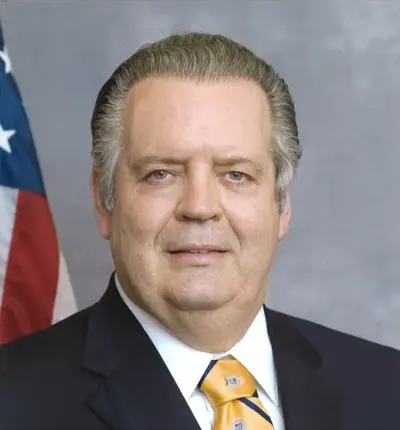
Richard D. Land (born 1946) is the president of Southern Evangelical Seminary in Charlotte, North Carolina, a post he has held since July 2013.
