Alan Greenspan Quotes
At the risk of some oversimplification, if the skill composition of our work force meshed fully with the needs of our increasingly complex capital-stock, wage-skill differentials would be stable, and the percentage changes in wage rates would be the same for all job grades.
Greenspan, Alan. "Job Insecurity and Technology." Speech at the John F. Kennedy School of Government, Harvard University, Boston, Massachusetts, 5 Sept. 1997.

At the time there was great demand for skilled computer programmers and other technical skills. But there was insufficient demand for many of the skills that the American Workforce such as airplane mechanics, or TV Camera people for example.


The nation was divided over the issue of immigration. Many observed that the vast majority of the immigrants—especially the illegal immigrants performed jobs for which American workers could not be hired. Opponents like the congressman, claimed that if better wages were paid Americans would be doing the jobs, and as long as there were immigrants who would work for low wages, there was little reason for employers to pay more.

It was fairly common for Englishmen to never have been more than 50 miles from his place of birth. Transportation was slow and crude and expensive. At the same time, economic conditions were relatively good in England eliminating the necessity of migration for survival—unlike Scotland which had much more mobility. Although Toynbee observed the greater mobility of labor in the United States, at the time it was much less than it became with the construction of the National Highway System and the dominance of the automobile as a mode of transportation followed by low cost air transport.


The good jobs that support middle and upper middle class lifestyles are growing at a lesser rate than the minimum and low wage jobs.


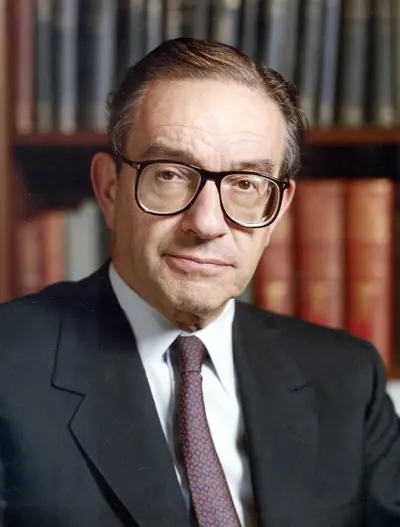
Alan Greenspan is an American economist who served five terms as the 13th Chair of the Federal Reserve of the United States from 1987 to 2006. He works as a private adviser and provides consulting for firms through his company, Greenspan Associates LLC. First appointed Federal Reserve chairman by President Ronald Reagan in August 1987, he was reappointed at successive four-year intervals until retiring on January 31, 2006, after the second-longest tenure in the position (behind William McChesney Martin).
