Book of Deuteronomy Quotes
At the end of every 7th year you must make a remission of debts…. Everyone who holds a pledge shall return the pledge to the person indebted to him. He must not press a fellow countryman for payment, for the Lord’s year of remission has been declared. You may press foreigners; but if it is a fellow countryman that holds anything of yours, you just renounce all claim on it.
This quotation illustrates the method by which the Ancient Jews (also modern ultra orthodox Christians and Jews coped with the problem of inequality of wealth and the problem of a permanent poor and debtor class. It was a form of redistribution of wealth. As a practical manner, this passage had a profound influence on the Jewish and early Christian cultures. Namely there was not a great deal of lending or borrowing amongst the Jews. However, Jews were able to obtain repayment for longer than the 7 years if they made a loan to foreigners. The early Christians had the same stricture. So Jews could lend money to Christians and Christians to Jews without being required to forgo collection ever 7th year. So for Christians, Jews were money lenders which is where the Jewish money lender stereotype had its origin.
Old Testament, Book of Deuteronomy, 15:1
Sourced by: Eigen's Political and Historical Quotations

This is one of the earliest expositions of the legal and economic doctrine that if a borrower is made unable to pay the interest and principle of the loan by an act beyond anyone’s control. The obligation to pay for that year is cancelled. In modern times most cultures go the other way. When the banks caused the economic Meltdown of 2008, millions of Americans could not pay their loan obligations and mortgages. They received no relief whereas in the “primitive” world of 4,000 years ago they would have relief for that year. Note the subtle difference in Hammurabi {611462} where someone had prepaid and rented land for a year and the crop fails, and this situation where there is borrowed money.


See {638095} for a brief explanation of the Jubilee. Spinoza was one of the most feared intellectuals in human history—feared that is by the established power structures. He is the only known person who was excommunicated by the Catholics, the Jews and the Muslims—all were forbidden to read his works. He was the enemy of authority and advocated personal reason as the guide for men.


That philosophy became embedded in most of our utilities and necessary services. With electricity, the people who live in dense population clusters pay more so that rural residents can obtain electricity at reasonable prices. Internet, cable TV, and telephone are similar. In pharmaceuticals, Americans pay much higher rates while 3rd world countries pay less than their share. The communities who invested in water infrastructure early are today subsidizing those communities who invested little. And people who live in areas of easy water availability subsidize people in the areas where they have abused their water resources or had few to begin with. People who live in safe areas subsidize people who choose to live in flood planes or box canyons susceptible to fires by paying more for insurance so the people in high risk areas can obtain affordable insurance.


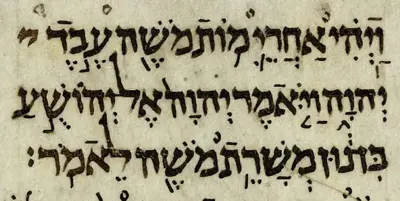
The Book of Deuteronomy (literally "second law" from Greek deuteros + nomos) is the fifth book of the Jewish Torah, where it is called Devarim (Hebrew: דְּבָרִים), "the words [of Moses]", and the fifth book of the Christian Old Testament, where it is also known as the Fifth Book of Moses.
