Errol Flynn Quotes
If there is anyone to whom I owe money, I'm prepared to forget it if they are.
Flynn, Errol. My Wicked, Wicked Ways. G. P. Putnam's Sons, 1959.


This is one of the proverbs of King Solomon of the Jews, son of King David.


The principle espoused in this quotation is the major reason that Health Care costs are so difficult to control. The individual patient and consumer is not driven by market conditions when his/her life is at stake.

This quotation illustrates the method by which the Ancient Jews (also modern ultra orthodox Christians and Jews coped with the problem of inequality of wealth and the problem of a permanent poor and debtor class. It was a form of redistribution of wealth. As a practical manner, this passage had a profound influence on the Jewish and early Christian cultures. Namely there was not a great deal of lending or borrowing amongst the Jews. However, Jews were able to obtain repayment for longer than the 7 years if they made a loan to foreigners. The early Christians had the same stricture. So Jews could lend money to Christians and Christians to Jews without being required to forgo collection ever 7th year. So for Christians, Jews were money lenders which is where the Jewish money lender stereotype had its origin.
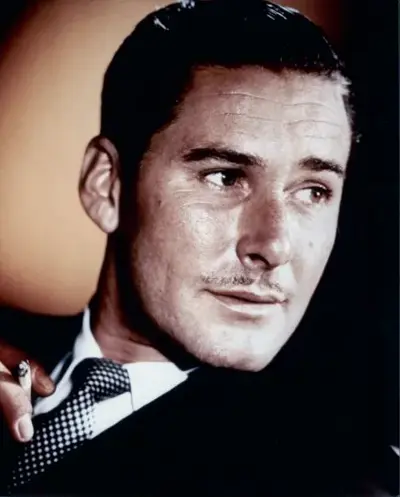
Errol Leslie Thomson Flynn was an Australian-born actor. Considered the natural successor to Douglas Fairbanks, he achieved worldwide fame during the Golden Age of Hollywood. He was known for his romantic swashbuckler roles, frequent partnerships with Olivia de Havilland, and reputation for his womanising and hedonistic personal life. His most notable roles include the eponymous hero in The Adventures of Robin Hood (1938), which was later named by the American Film Institute as the 18th greatest hero in American film history, the lead role in Captain Blood (1935), Major Geoffrey Vickers in The Charge of the Light Brigade (1936), and the hero in a number of Westerns such as Dodge City (1939), Santa Fe Trail (1940), and San Antonio (1945).
