Ludwig von Mises Quotes
Assistance granted to the unemployed does not dispose of unemployment. It makes it easier for the unemployed to remain idle.
von Mises, Ludwig. Socialism: An Economic and Sociological Analysis. Jonathan Cape, 1936.

This incredible quotation was actually typical of many of the extremist right wing views that Angle had. Very few conservatives who may have problems with the unemployment insurance system believe that the benefits are so generous that anyone would possibly be spoiled from the benefit. An unemployed family head, who may have been middle class, if he or she lost a job and while looking for another is supported by unemployment in almost all cases will be below the poverty level. This is hardly a standard of living that would spoil anyone. The voters of Nevada certainly thought so as they defeated Angle at the polls.


Mormons in later years found this principle difficult to enforce where there was unemployment and workers were idle through no fault of their own. The local Mormon churches were very active in encouraging wealthier Mormons to hire those who were unemployed.


The existence of a groups of de facto “unemployable” people has been with our country since its inception. However over time, the cadre of unemployable people has changed as the simple jobs are lost to automation and computerized solutions and the jobs that are left require an extensive education and skills set. While the New Deal programs helped reduce the numbers of unemployable people, and WWII required such great production, by the 21st century, the “unemployable” population had grown substantially and proportionately from 1936.


FDR assumed office with the Great Depression raging, and rapidly provided relief to destitute Americans—see related quotes.

Communications were quite primitive and out of desperation many jobless men would just walk the main road to the next community in hopes of finding work there.
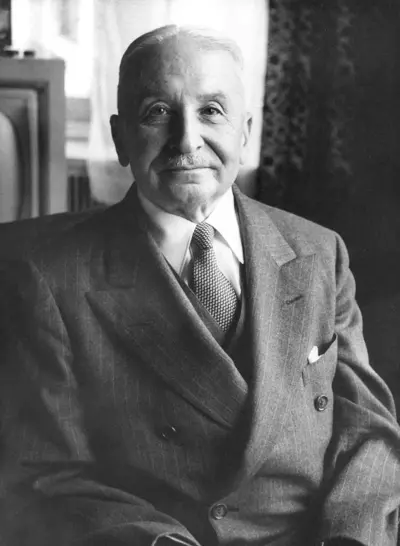
Ludwig Heinrich Edler von Mises was an Austrian School economist, historian, logician and sociologist. Mises wrote and lectured extensively on the societal contributions of classical liberalism. He is best known for his work on praxeology, a study of human choice and action.
