John F. Kennedy Quotes
Needy children are eligible for assistance if their fathers are deceased, disabled, or family deserters. In logic and humanity, a child should also be eligible for assistance if his father is a needy unemployed worker—for example, a person who has exhausted unemployment benefits and is not receiving adequate local assistance.
John F. Kennedy, 1917-1963, 35th President of the United States (Democrat, MA), Message to Congress, February 2, 1961
Sourced by: Eigen's Political and Historical Quotations


This statement was a total reverse of his predecessor’s policy. Hoover stubbornly refused to consider any direct relief for workers on the philosophical ground that it would weaken their character, make them dependent, and provide benefits for the people who were not working so the motivation to work would be lessened. When FDR pronounced this on the radio, it dramatically reversed U. S. policy and gave many people hope that the government might do something about the depression rather than just wait out the business cycle.


He wanted to condition long term unemployment insurance payments on the recipient taking training courses or other means of improving his/her skills and becoming more employable. He was opposed on the left by those who observed that this was insurance; the working nothing from the government; the worker had paid for it when he/she was working. It was his and was not conditioned on government requirement. The right wing opposed the idea as they had always wanted the out of work people to have little or no other opportunity than to take the worst and lowest paying jobs in the society. They also pointed out that if training was to be provided, it would cost more and not less. But Gingrich and his supporters on this idea observed that there were many jobs available even with the high unemployment rate; the unemployed workers just did not have the skills to do these jobs. Train them and unemployment would go down. The investment in unemployment insurance and training would pay off many times over.

This was one of the first observations and statements about the cultural and economic perpetuation of poverty and welfare.

What makes this a noteworthy political quotation is that when he made the statement, his party had lurched to the radical right and almost no one else in the Republican party would publicly say that the Federal Government had any legitimate role that involved social services, food distribution, welfare or health care. Also the Republican Presidential candidate the day before had been discovered writing off the poorest 43 percent of the country. Heller however, was up for reelection in a state what was hit much harder than most in the Great Recession and without Federal Assistance many state residents would be in terrible circumstances and Heller would not fare well in the election if he took the then required Republican ideology. Also, Heller came from a blue collar family and had a much different outlook than most Republicans of that particular time.

"They" were the undocumented immigrants coming from Mexico,


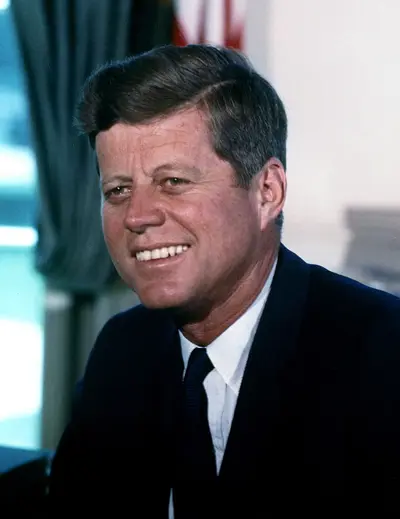
John Fitzgerald Kennedy, often referred to by his initials JFK, was an American politician who served as the 35th president of the United States from 1961 until his assassination in 1963. Kennedy served at the height of the Cold War, and the majority of his work as president concerned relations with the Soviet Union and Cuba. A Democrat, Kennedy represented Massachusetts in both houses of the U.S. Congress prior to becoming president.
