Jacob Weisberg Quotes
As with the government failures that made 9/11 possible, neglecting to prevent the crash of '08 was a sin of omission - less the result of deregulation per se than of disbelief in financial regulation as a legitimate mechanism.
Weisberg, Jacob. "The Financial Crisis." Slate, The Slate Group, 2009.

Greenspan and some others assumed that the shareholders and the executives who ran the financial institutions had the same vested interests. But the executives had disconnected themselves from the fate of the shareholders, by having Golden Parachutes to protect the executives even if the business failed and they were fired. And they got their bonuses immediately so by the time the authorities and the shareholders discovered that the profits the bonuses were paid for were illusory, the bonus money was safely stored in a secret offshore bank. But if things went wrong, there was always the play of getting a government bailout which would keep the executives getting their huge bonuses and keep the shareholders from losing their money as the taxpayers covered most of the losses.


He was referring to Fannie Mae, the government-created. private mortage guarantee company. It was heavily regulated, and in general it met the regulatory requirements. However, the requirements were insufficient, and in the 2008 Meltdown and the Great Recession that followed, Fannie Mae itself was in such bad financial condition, that the Federal Government had bail them out or have the entire home mortgage industry fall apart.


Economic is often called “the dismal science” as its ability to make predictions has never been very good. The Great Depression was also missed, else it would not have come as such a shock. There have been a few economists who correctly predicted these economic downturns but they generally continuously predict recessions and depressions that never happen.

Banks often lie. The system encourages them to do so. In a crisis, if a bank honestly says that it is not sure that it has enough cash and other liquid assets, others will not lend it any more money and depositors will rush to withdraw their money, thereby almost insuring a failure. The bank that lies, might weather the storm and survive.


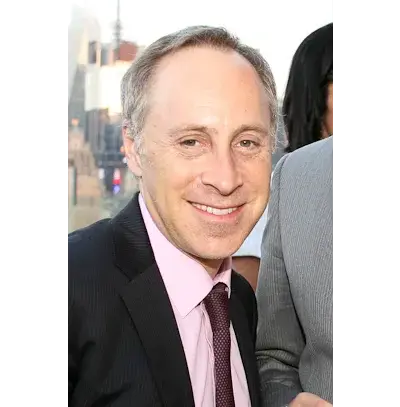
Jacob Weisberg (born 1964) is an American political journalist, who served as editor-in-chief of The Slate Group, a division of Graham Holdings Company. In September 2018, he left Slate to Co-found Pushkin Industries, an audio content company, with Malcolm Gladwell. Weisberg was also a Newsweek columnist. He served as the editor of Slate magazine for six years before stepping down in June 2008. He is the son of Lois Weisberg, a Chicago social activist and municipal commissioner.
