John Locke Quotes
As the magistrate has no power to impose by his laws the use of any rites and ceremonies in any church, so neither has he any power to forbid the use of such rites and ceremonies as are already received, approved, and practised by any church; because if he did so, he would destroy the church itself; the end of whose institution is only to worship God with freedom, after its own manner.
Locke, John. A Letter Concerning Toleration. Awnsham Churchill, 1689.


Bishop Ames had been appointed by the war department to take charge of all the Christian churches in the Southern states as they were defeated. The reason is that most Southern clerics were advocates of the rebellion. However many Northern churches, especially those in border states also contained ministers who were not only preaching treason but also aiding the Southern cause. The President thought that the War Department’s order gave Ames authority over all churches where the minister aided the rebellion. So he wrote to Ames limiting the authority. After the President was assured that Ames authority would only extend to Southern churches that had been in the rebellion, Lincoln allowed Ames to appoint ministers and control churches. This is the only time in American history that the Federal government actually controlled churches directly.

At the time Kaunitz was a young lawyer and diplomat who had abandoned the church career that his parents had hoped for him.

This appears to be one of the first religious groups to withdraw and separate from a state church.

The same phrase was used by Count de Montalembert at a Catholic conference in Malines, August 20, 1863, and is sometimes attributed to him.

Curtis had at first arrested Samuel B. McPheeters a St. Louis preacher for pro-Southern sermons. Lincoln had countermanded the arrest order. Curtis released the pastor, but prohibited him from preaching in his own church. It took Lincoln many months to find this out and Lincoln then instructed this second instruction to Curtis not to continue the ban.


Carroll was writing to Troy during the time of the question of Catholic emancipation in England. Here he is clearly alluding to the British form of government. Carroll never missed the opportunity to champion religious freedom as manifested in the U.S. Constitution. For an earlier example of his praise for religious freedom, see {596933}.


This is a critical quotation on the government establishment of religion issue. There are a few people who have argued over the years that the Founding Fathers and their culture was religious and where they were careful to avoid favoring one religion over another, they did NOT intend to put atheism on the same equal plane as religion as far as government action is concerned. However, some of the Founding Fathers were atheists, and some others like John Adams were deists—they believed in a God but not in the Trinity or in Judaism or any organized religion. So this quotation makes it clear that the First Amendment does NOT favor religion over non religion or secularism. Atheism must be on an equal footing but not on a higher plane.


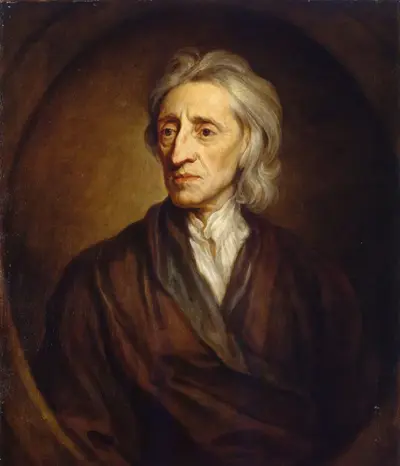
John Locke FRS was an English philosopher and physician, widely regarded as one of the most influential of Enlightenment thinkers and commonly known as the "Father of Liberalism". Considered one of the first of the British empiricists, following the tradition of Sir Francis Bacon, Locke is equally important to social contract theory. His work greatly affected the development of epistemology and political philosophy. His writings influenced Voltaire and Jean-Jacques Rousseau, and many Scottish Enlightenment thinkers, as well as the American Revolutionaries. His contributions to classical republicanism and liberal theory are reflected in the United States Declaration of Independence.
