Elijah Parish Lovejoy Quotes
As the Bible inculcates upon man but one duty in respect to sin, and that is immediate repentance, abolitionists believe that all who hold slaves, or who approve the practice in others, should immediately cease to do so.
Lovejoy, Joseph C., and Owen Lovejoy. Memoir of the Rev. Elijah P. Lovejoy; Who Was Murdered in Defence of the Liberty of the Press, at Alton, Illinois, Nov. 7, 1837. John S. Taylor, 1838.

As an entertainer she had toured much of the world and seen American slavery and that of some other nations. She became a staunch abolitionist and like entertainers in the 20th and 21st centuries she used her celebrity to give anti-slavery lectures and perform for audiences where she donated the proceeds of the event to the abolition cause. She is a particularly interesting political figure in that she seems to be one of the first entertainers to perform for a social cause and become an activist.


Even before we had a Constitution there was major opposition to slavery. The “price” of the American Union was the acceptance of the slavery of the South. But the hypocrisy of a country based on liberty to allow and enforce slavery was not lost on the founding fathers. Ironically the abolitionists among the founding fathers were certain that they could persuade the Southern slaveholders of the error of slavery in a few years and things would be set right in the land. Even George Washington {630626}, and Thomas Jefferson and some other slaveowners at the time wished to see its abolition. Slaveholding Southern Founding Fathers in general were so wary of the abolitionists that they achieved structural, disproportionate, power in the new Constitution to ward off the abolitionists attempts to reform slavery.


This was Wesley’s last letter. Wilberforce, a member of Parliament, had been a convert to Methodism and was the leading spokesperson in Parliament for making participation in the slave trade illegal. It would take 16 years of effort before England outlawed participation in the slave trade. Note the distinction commonly made by abolitionists at the time regarding American slavery as the worst of all.

Later changed the name to The Emancipator. Many are surprised that a Southern State would have had such strong abolitionist sentiment so early, but East Tennessee was a hotbed of abolition. See {614117} and {614069}

The first anti-slavery newspaper published in the United States & the first journal in America to advocate immediate, unconditional emancipation


The Mystery was for many years the only Black Newspaper in America.

There were no women’s shelters in the 19th century, and the police or sheriffs would not entertain a complaint from a wife for assault, sexual or otherwise. She compared the state of women to that of fugitive slaves a few decades earlier. Then there was the Underground Railroad and other institutions which would shelter and help the slaves. There was no such mechanism for women abused in their marriage.

This moral statement from a New jersey Quaker abolitionist is not particularly noteworthy, However what makes this quote important is that Woolman traveled throughout the South preaching this as his main theme. At that time — before the American Revolution — he did so and was not attacked or intimidated; he was mostly ignored by the Southern authorities. At the time, the South was very confident of its ability to continue slavery. Years later, when the abolition movement grew larger and stronger, a Northern Quaker Preacher doing this not not escape with his life.


Jefferson was then the United States Minister to France. While in Paris he was offered membership by M. de Warville in the Society for the Abolition of the Slave-Trade. Jefferson felt that he had to decline because his joining would have been seen as a politically polarizing act, inappropriate for an Ambassador of the American government which was divided on the issue of slavery. Some criticize the refusal and argue that this would have been the perfect act to push the abolition perspective, and question Jefferson’s sincerity about slavery as he not only refused to join the society, but never freed his own slaves though it is argued that he never made enough money to afford to emancipate them.

Benezet was a Huguenot whose family had been persecuted in France. He identified with the cause of Blacks, Indians and Acadians. He was also one of the first leaders of the American Peace Movement.


His family was one of the wealthiest in Rhode Island. He called in the entire family and he formally read the deed. The family itself had actually been active in the slave trade under John, his oldest brother, so this deed was very shocking to them. Moses became a leading abolitionist in Rhode Island and John the major defender of slavery in the state. Despite that, the brothers actually remained close.
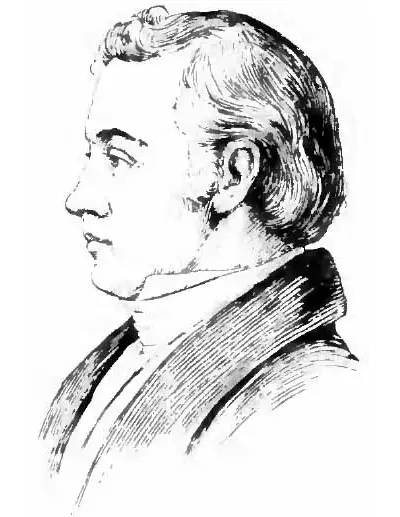
Elijah Parish Lovejoy was an American Presbyterian minister, journalist, newspaper editor, and abolitionist. He was shot and killed by a pro-slavery mob in Alton, Illinois, during their attack on the warehouse of Benjamin Godfrey and W. S. Gillman, where Lovejoy's press and abolitionist materials were stored.
