Ernst Mayr Quotes
As a consequence, geneticists described evolution simply as a change in gene frequencies in populations, totally ignoring the fact that evolution consists of the two simultaneous but quite separate phenomena of adaptation and diversification.
Mayr, Ernst. What Evolution Is. Basic Books, 2001, p. 119.


This quotation from this letter was one of the key items of evidence showing that Wallace had independently developed the concept of Evolution before Darwin published his famous treatise. Darwin began formulating his theory of natural selection in the late 1830s but he went on working quietly on it for twenty years. He wanted to amass a wealth of evidence before publicly presenting his idea. During those years he corresponded briefly with Wallace (right), who was exploring the wildlife of South America and Asia. Wallace supplied Darwin with birds for his studies and decided to seek Darwin's help in publishing his own ideas on evolution. He sent Darwin his theory in 1858, which, to Darwin's shock, nearly replicated Darwin's own…. Joseph Dalton Hooker arranged for both Darwin's and Wallace's theories to be presented to a meeting of the Linnaean Society in 1858. However, Wallace seems to have been onto the idea of evolution over a decade before as this quotation shows.


Evolution sometimes produce or retain components that have no purpose or are even inefficient. But he is urging the biologist to remember that none of the life form were designed much less designed efficiently. We humans have an appendix for example, which does nothing positive and sometimes gets infected and kills us. Yet it is still there. We have so much else on the positive side that a few weaknesses are not material to our survival.


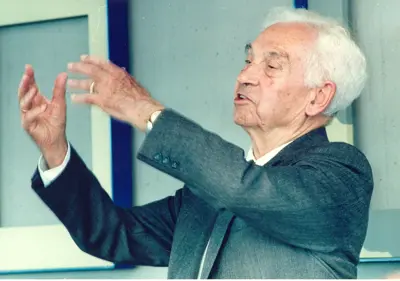
Ernst Walter Mayr was one of the 20th century's leading evolutionary biologists. He was also a renowned taxonomist, tropical explorer, ornithologist, philosopher of biology, and historian of science. His work contributed to the conceptual revolution that led to the modern evolutionary synthesis of Mendelian genetics, systematics, and Darwinian evolution, and to the development of the biological species concept.
