William A. Dembski Quotes
Natural selection certainly operates. It explains how bacteria will gain antibiotic resistance; it will explain how insects get insecticide resistance, but it doesn't explain how you get bacteria or insects in the first place.
Dembski, William A. The Design Revolution: Answering the Toughest Questions About Intelligent Design. InterVarsity Press, 2004, p. 58.


This quotation from this letter was one of the key items of evidence showing that Wallace had independently developed the concept of Evolution before Darwin published his famous treatise. Darwin began formulating his theory of natural selection in the late 1830s but he went on working quietly on it for twenty years. He wanted to amass a wealth of evidence before publicly presenting his idea. During those years he corresponded briefly with Wallace (right), who was exploring the wildlife of South America and Asia. Wallace supplied Darwin with birds for his studies and decided to seek Darwin's help in publishing his own ideas on evolution. He sent Darwin his theory in 1858, which, to Darwin's shock, nearly replicated Darwin's own…. Joseph Dalton Hooker arranged for both Darwin's and Wallace's theories to be presented to a meeting of the Linnaean Society in 1858. However, Wallace seems to have been onto the idea of evolution over a decade before as this quotation shows.


Evolution sometimes produce or retain components that have no purpose or are even inefficient. But he is urging the biologist to remember that none of the life form were designed much less designed efficiently. We humans have an appendix for example, which does nothing positive and sometimes gets infected and kills us. Yet it is still there. We have so much else on the positive side that a few weaknesses are not material to our survival.


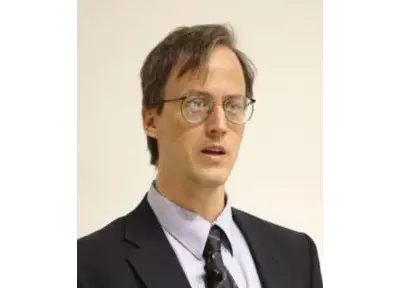
William Albert "Bill" Dembski is an American mathematician, philosopher and theologian. He was a prominent proponent of intelligent design (ID) pseudoscience, specifically the concept of specified complexity, and was a senior fellow of the Discovery Institute's Center for Science and Culture (CSC). On September 23, 2016 he officially retired from intelligent design, resigning all his "formal associations with the ID community, including [his] Discovery Institute fellowship of 20 years."
