Rebecca MacKinnon Quotes
As a condition for entry into the Chinese market, Apple had to agree to the Chinese government's censorship criteria in vetting the content of all iPhone apps available for download on devices sold in mainland China.
MacKinnon, Rebecca. Consent of the Networked: The Worldwide Struggle For Internet Freedom. Basic Books, 2012.


This seemingly logical inconsistency is actually typical of many nations and cultures that practice censorship. Freedom in this is a concept of a limited freedom—limited to what is reasonable, not harmful, not offensive. So all are free to behave within a circumscribed set of norms. By this logic, freedom is not being curtailed if the state acts to stop activity beyond those norms. Every nation accepts this principle to some extent. In America one “cannot should fire in a crowded theater” but there are very few other restrictions. But in Germany, Israel and other modern Industrial democracies there is censorship of material that promotes ethnic hatred whereas in the U. S. that is protected from censorship. In China many sites on the Internet have material that is regarded as inflammatory, or slanders the government and this is bad because people might lose confidence in their government. So freedom of speech and censorship issues are matters of degree with the United State being at one end of the scale and North Korea and Saudi Arabia being at the other end. China has been moving from the North Korean end of the scale towards the middle.

For example, most of the documents that are classified as secret in the CIA are so classified because the censor thought the information might be damaging to the CIA’s interest, not the American citizen’s. However, there is a strange logic that is sometimes given to justify censoring material that would embarrass the agency: If the agency is embarrassed, public support and confidence in the agency will be eroded, and that in turn will cause investigations, reviews, and possible diminished budgets. This would be distracting from the agency’s mission of keeping Americans safe, so the public should be kept in the dark about embarrassing material.
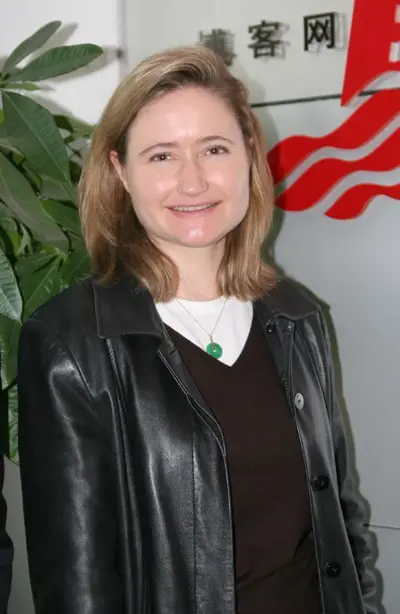
Rebecca MacKinnon is an author, researcher, Internet freedom advocate, and co-founder of the citizen media network Global Voices. She is notable as a former CNN journalist who headed the CNN bureaus in Beijing and later in Tokyo. She is on the Board of Directors of the Committee to Protect Journalists, a founding board member of the Global Network Initiative and is currently director of the Ranking Digital Rights project at the New America Foundation's Open Technology Institute.
